

-
Research Paper
- Cu Nanosheet Surface Bridging of Hierarchical MgO Fillers for High-Thermal-Conductivity Epoxy Composites
- Sunhyun Nam, Artavazd Kirakosyan, Jihoon Choi
- Efficient thermal management requires polymer composites with high thermal conductivity and electrical insulation. However, conventional highly filled composites often suffer from inefficient …
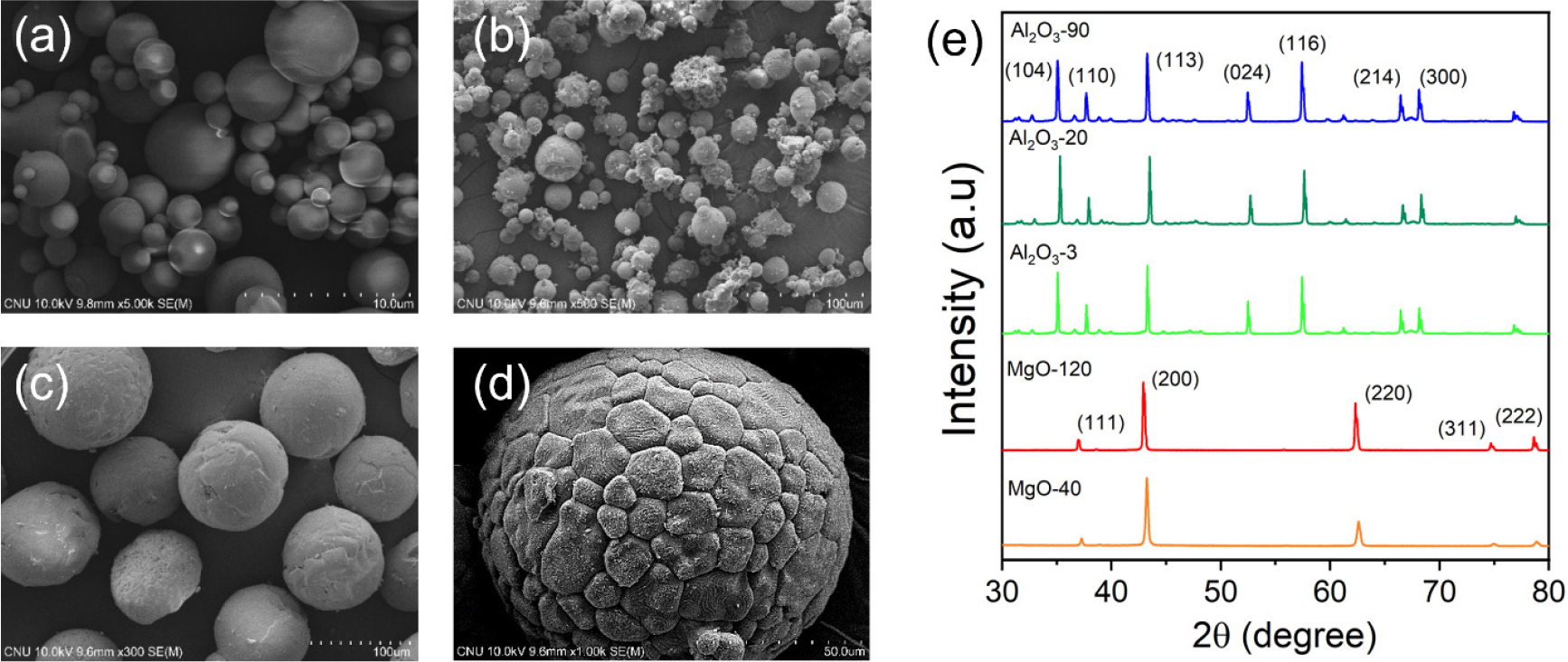
- Efficient thermal management requires polymer composites with high thermal conductivity and electrical insulation. However, conventional highly filled composites often suffer from inefficient filler packing, limited particle–particle contact, and high interfacial thermal resistance, which restrict heat transport. This study proposes a hierarchical filler-network strategy that combines interstitial-site engineering and Cu nanosheet-mediated interfacial bridging to improve heat transport in highly filled MgO/epoxy composites. Smaller MgO particles effectively occupied the interstitial regions between primary MgO fillers. Cu nanosheets, selectively deposited on the MgO surface through an ultrasonication-assisted process, formed localized thermal bridges between neighboring fillers. Structural analyses confirmed denser filler packing and uniform Cu surface decoration. The thermal conductivity increased by approximately 33% from 3.6 to 4.8 W/m・K at 90 wt%. The improved thermal performance is attributed to the combined effects of reduced polymer-rich interstitial regions, enlarged particle–particle contact areas, and lower interfacial thermal resistance. The proposed strategy provides an effective approach for designing high-performance thermally conductive polymer composites for advanced thermal management applications. - COLLAPSE
-
Research Paper
- Microstructural, Mechanical, and Electrical Properties of Al-Fe-Mg-Cu-B-Si Alloy Wire during Cold Drawing
- Hyeon-Jun Heo, Hyunkyoo Cho, Hyeon-Taek Son, Seong-Hee Lee
- A new aluminum alloy for electric vehicles was designed to enhance both strength and electrical conductivity. After casting and extrusion, the Al …
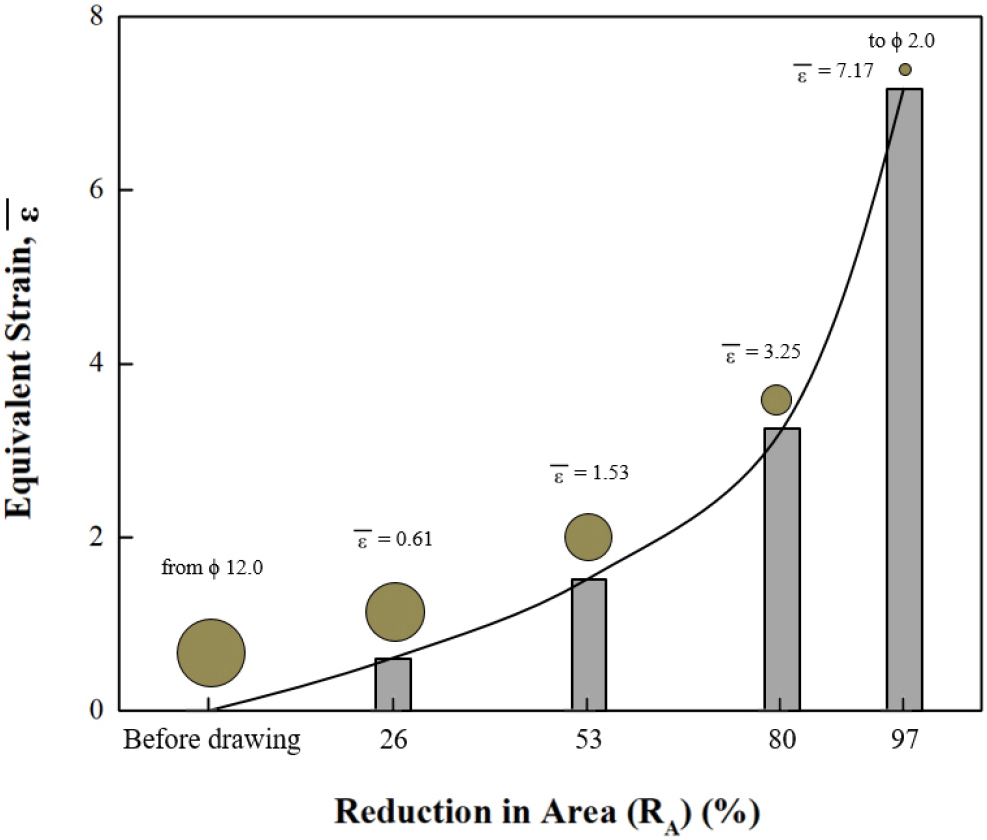
- A new aluminum alloy for electric vehicles was designed to enhance both strength and electrical conductivity. After casting and extrusion, the Al alloy wire was cold drawn from 12 mm to 2 mm in diameter through 22 passes. The changes in microstructure, mechanical properties, and electrical conductivity were systematically investigated using microstructural analysis, hardness testing, tensile testing, and electrical conductivity measurements. During cold drawing, the initial recrystallization texture gradually transformed into a deformation texture with preferential development in the {110}<111> orientation. The fraction of low-angle grain boundaries increased from 72.1 % to 89.2 %, indicating continuous dislocation accumulation and subgrain formation, while the high-angle grain boundary fraction increased again at the final drawing stage owing to dislocation rearrangement. As the amount of cold drawing deformation increased, the hardness and strength greatly increased, while the electrical conductivity decreased only slightly from 61.6 to 59.7 %IACS. Compared with the previously reported Al-Fe-Mg-Cu-B alloy, the present Al alloy wire exhibited slightly lower tensile strength but significantly improved electrical conductivity, demonstrating its potential as an aluminum conductor material with improved electrical conductivity. - COLLAPSE
-
Research Paper
-
Random-Forest Uncertainty Decomposition for Coercivity Prediction of Sintered NdFeB Magnets: Extrapolation Reliability and Active-Learning Candidate Selection
랜덤 포레스트 불확실성 분해를 이용한 NdFeB 소결자석 보자력 예측 모델의 외삽 신뢰도 및 능동 학습 후보 분석
-
Chunghee Nam
남충희
- Sintered NdFeB permanent magnets are indispensable in electric-vehicle motors, wind-turbine generators and other applications, and their performance at elevated temperatures is critically …
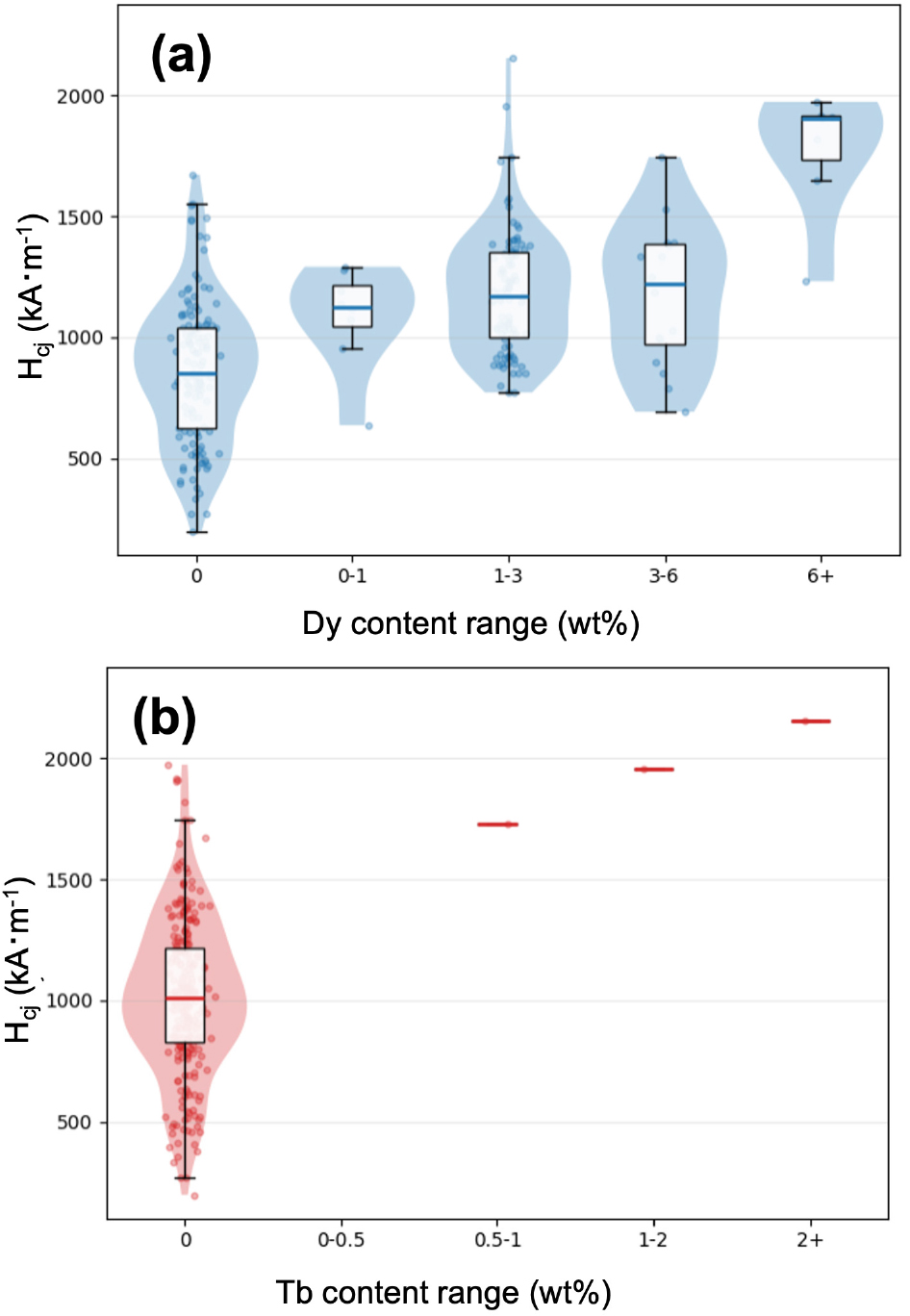
- Sintered NdFeB permanent magnets are indispensable in electric-vehicle motors, wind-turbine generators and other applications, and their performance at elevated temperatures is critically governed by coercivity. Although machine learning is widely used to predict such properties, the inability to quantify predictive reliability makes it difficult to assess, a priori, the risk in unexplored compositional regions. In this study, a random-forest regression model was trained on an experimental NdFeB dataset of 262 samples, and the predictive uncertainty was decomposed into epistemic and aleatoric components based on variance conservation. To create an extrapolation scenario, 137 dysprosium (Dy)-free samples formed the training set and 125 Dy-containing samples comprised the test set. The model, accurate on the training set (R2 = 0.965), collapsed on the test set (R2 = -0.994), while the total predictive uncertainty increased roughly fifteen-fold. When the eleven most promising candidates were selected using an acquisition score derived from the two uncertainties, all clustered in the low-Dy region. However, in a direct validation, adding such a “favorable” low-Dy candidate barely changed test performance (∆R2 = +0.029), whereas adding a high-Dy sample—deemed “unfavorable” by the score—substantially improved it (∆R2 = +0.508). These findings indicate that the simple variance-subtraction scheme can misclassify model bias as aleatoric uncertainty under extrapolation, and suggest that, from an active-learning perspective, preferentially acquiring samples in high-error extrapolative regions is a more data-efficient strategy. - COLLAPSE
-
Random-Forest Uncertainty Decomposition for Coercivity Prediction of Sintered NdFeB Magnets: Extrapolation Reliability and Active-Learning Candidate Selection
-
Research Paper
-
Application of Ribose-EDC/NHS Dual Crosslinking to Improve Functional Stability of Porcine Skin-Derived Collagen Barrier Membranes
돼지 피부 유래 콜라겐 차폐막의 기능적 안정성 향상을 위한 리보스-EDC/NHS 이중 가교의 적용
-
Hyun Su Park, Tae Ryeol Kim, Su Jeong Lim, Ji Eun Kim, Hee Jin Song, Ayun Seol, Ye Eun Ryu, Ye Ryeong Kim, You Jeong Roh, Ji Yun Yun, Byoung Soo Kim, Dae Youn Hwang
박현수, 김태렬, 임수정, 김지은, 송희진, 설아윤, 류예은, 김예령, 노유정, 윤지윤, 김병수, 황대연
- Collagen barrier membranes are widely used in guided tissue regeneration (GTR) and guided bone regeneration (GBR), but extracted collagen-based membranes can show …
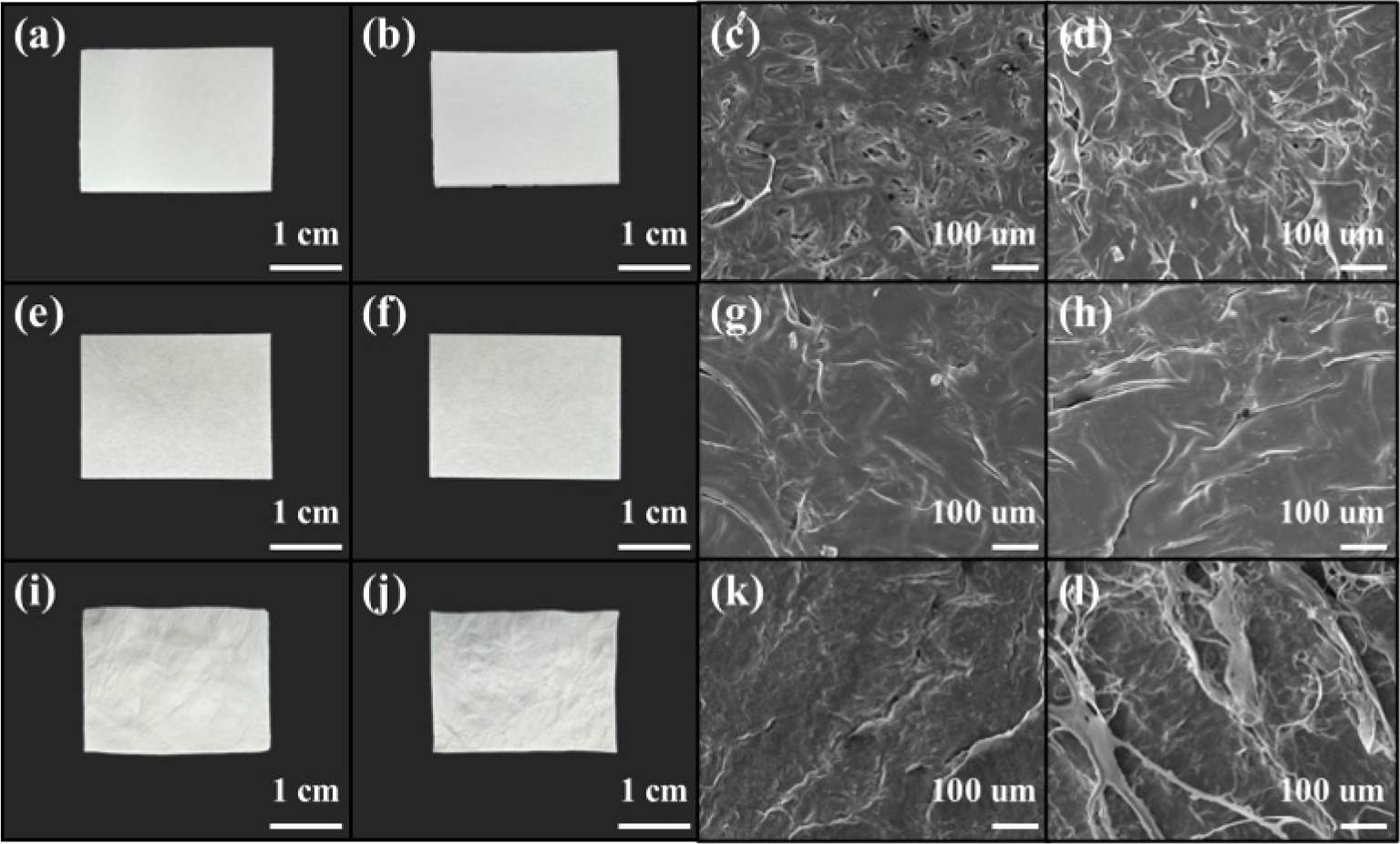
- Collagen barrier membranes are widely used in guided tissue regeneration (GTR) and guided bone regeneration (GBR), but extracted collagen-based membranes can show limited mechanical stability and rapid enzymatic degradation. In this study, we investigated whether ribose-1-ethyl-3-(3-dimethylaminopropyl) carbodiimide/N-hydroxysuccinimide (EDC/NHS) dual crosslinking improves the functional stability of a porcine skin-derived collagen barrier membrane. To achieve this, optimal conditions for dual crosslinking were established, and these conditions were applied to produce a ribose-EDC/NHS dual-crosslinked collagen barrier membrane (RENC) using a non-crosslinked collagen membrane (COL). Then their mechanical and physicochemical properties and biocompatibility were analyzed. RENC showed a denser surface morphology than COL while retaining major collagen-related amide band patterns. RENC also exhibited distinctive thermal behavior compared to COL and improved tensile properties. After collagenase and trypsin treatment, RENC showed lower weight loss than COL, indicating enhanced resistance to enzymatic degradation. In L-929 cell-based assays, RENC maintained cytocompatibility without inducing apparent morphological changes. In the subcutaneous implantation rat model, RENC gradually degraded over time. Residual membrane area tended to decrease over time in both RENC and a bovine pericardium-derived barrier membrane (BP), and no necrosis or other adverse local tissue reactions were observed in either group. These results suggest that ribose-EDC/NHS dual crosslinking may be a useful strategy for improving the functional stability of extracted collagen-based barrier membranes. - COLLAPSE
-
Application of Ribose-EDC/NHS Dual Crosslinking to Improve Functional Stability of Porcine Skin-Derived Collagen Barrier Membranes

Journal Informaiton
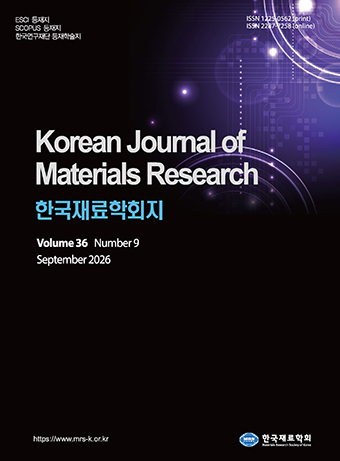 Korean Journal of Materials Research
Korean Journal of Materials Research








 Materials Research Society of Korea
한국재료학회
1611, 200, Wangsan-ro, Dongdaemun-gu, Seoul, Republic of Korea
Tel: +82-2-566-4496 / Fax: +82-2-566-4497 / E-mail: jmrs@mrs-k.or.kr Copyright© Materials Research Society of Korea. Powered by APUB
Tel: +82-2-566-4496 / Fax: +82-2-566-4497 / E-mail: jmrs@mrs-k.or.kr Copyright© Materials Research Society of Korea. Powered by APUB