


1. Introduction
2. Effect of UV Exposure on the Skin
3. Classification of Sunscreen Agents
3.1. Organic compound based sunscreen
3.2. Inorganic compound based sunscreen
3.3. Hybrid compound based sunscreen
4. Zeolite Application in Sunscreen Formulation
5. Application of Nanoclay on Sunscreen Formulation
6. Application of Layered Double Hydroxide in Sunscreen Formulation
7. Sunscreen Regulation
8. Conclusion
1. Introduction
Indonesia is located on the equator allow exposure to sunlight with high intensity. Light exposure sun can cause damage to skin from ultraviolet (UV) radiation. In addition, the resulting climate change by global warming can cause increasing exposure to UV rays. Excessive exposure to ultraviolet (UV) radiation can cause redness (erythema) of the skin as a result of an inflammatory response.1,2) In recent studies, it has been discovered that long-term UV exposure can lead to the development of skin cancer, in which melanocytes transform into melanoma cells.3,4) Damages to this part of the human body can be caused by various factors, including duration of sun exposure, geographic location, age, skin color, behavior, and activities.5-7)
Sunscreen is a topical product that consists of certain chemicals that allow for its absorptive and reflective characteristics on UV rays. UV rays are divided into UVA, UVB, and UVC with wavelengths of 320~400 nm, 290~400 nm, and 200~290 nm, respectively.8) Sunscreens protect the skin from UV radiation, which can cause cancer. Furthermore, it can also prevent other effects, such as aging and pigmentation.9)
Sunscreen is often used as a skin protector from UV radiation, particularly during outdoor activities.10) Evidence of its protection from UV exposure has been reported.11)
Based on the formulation, sunscreens can be divided into two categories, namely chemical-based and mineral-based. Many materials have developed for its manufacturing, bringing hybrid sunscreens. The safety and comfort of using this device are critical. The products should meet testing standards to ensure that it does not cause a burning sensation or irritation to the skin and cause pain to the eyes and skin.12)
This article reviews the application of inorganic materials in sunscreen formulations. The effect of UV rays and their potential exposure on human skin are also expanded along with the regulation, specifically in Indonesia. Mineral-based sunscreen was appointed because it minimizes irritating effects, making it more suitable for sensitive skin, environmentally friendly, and provides maximum SPF/PA scale protection.13)
2. Effect of UV Exposure on the Skin
UV rays have positive and negative effects on human skin. Regarding the former, 90 % of vitamin D is produced by skin exposed to this radiation over a certain period.14) The human epidermis has a natural photoprotection mechanism through the production of melanin and melanocytes. However, such a mechanism is insufficient when excessive and long-term sun exposure is involved.9,15) UVA and UVB rays can cause premature aging to melanoma.16,17) UVA with a wavelength of 320~400 nm has carcinogenic properties and can damage DNA, hence, it plays an essential role in melanoma.18) Skin exposed to UVB rays for an extended period without any protection is susceptible to harmful effects, namely the damage to cells and DNA in human keratinocytes that can cause cancer.19) Excessive UV exposure can cause skin malignancies, and one of the most prominent groups are squamous cell carcinoma (SCC), basal cell carcinoma (BCC), and malignant melanoma.20) The ratio of UVA and UVB can be affected by time, season, altitude, and latitude, hence, direct exposure to the skin or through glass windows without any protection can cause damage and even melanoma.21) Ultraviolet radiation (UVR) is a risk factor that can lead to melanoma and non-melanoma. This focuses on the need for public health action, understanding melanoma and its risks, and knowledge of continuous exposure to UVA and UVB rays without any protection.22) Sun protection aims to minimize the unwanted negative effects of this radiation. Using sunscreens to protect the skin from harmful UVA and UVB rays have been shown to provide long-term benefits in reducing the risk of cancer and preventing signs of aging.23) Additionally, the literature stated that regular use of this device can delay aging in human skin.24)
Ultra Violet (UV) rays have many effects on the skin, ranging from mild to acute. Studies stated that exposure to UV light without any protection for the skin can cause premature aging. It also explains that this radiation is responsible for 80 % of the visible signs of facial aging.25) Exposure to UV light can lead to the thickening of the epidermis, which can be called hyperkeratosis.26) Bright skin color is one of the most significant risk factors for melanoma development. Furthermore, the rays can damage keratinocytes and melanocytes, resulting in more disruption of the skin.26) Exposure to low-intensity radiation can cause DNA damage in either light or dark skin.27)
3. Classification of Sunscreen Agents
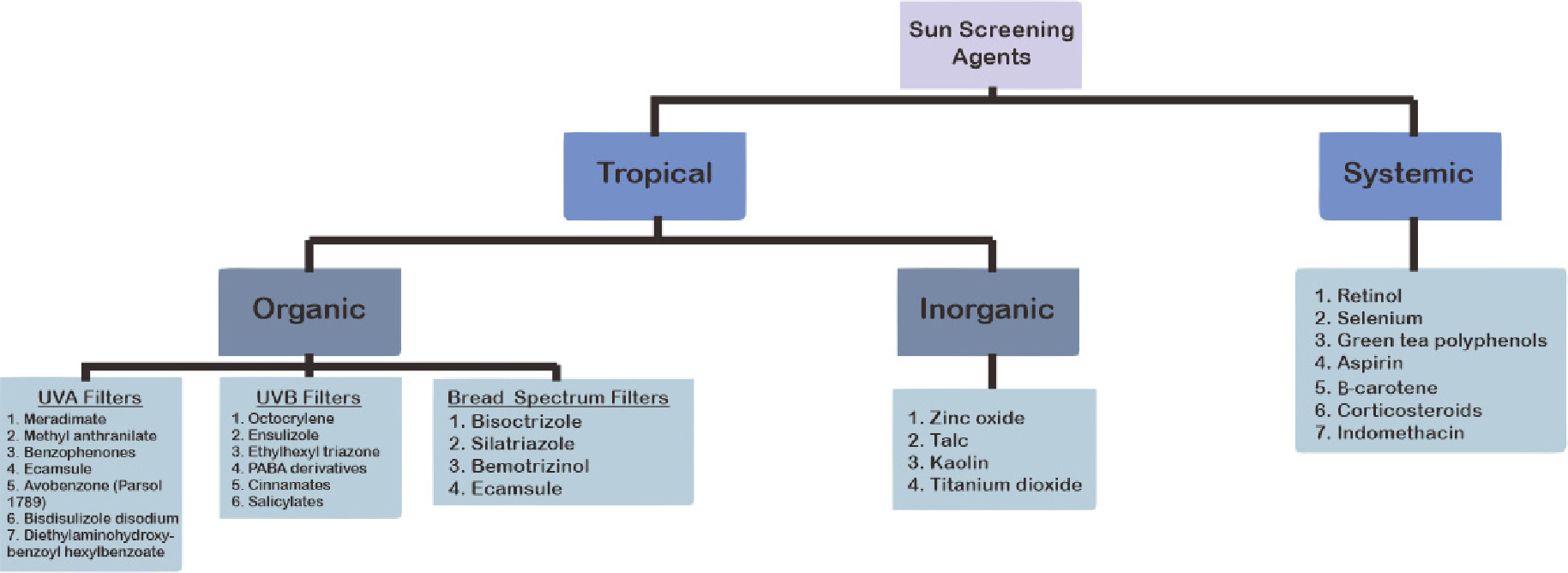
Sunscreen is a product designed to protect human skin from UV radiation. It can contain one or more UV filters and broadly be classified into tropical and systemic agents. Tropical sunscreen can be divided into three categories, namely organic, inorganic, and hybrid compound, as shown in Fig. 1. In general, sunscreen products are divided into inorganic and organic UV filters, each of which has a specific mechanism of action when exposed to sunlight. As opposed to organic blockers, which absorb high-energy UV radiation, inorganic substances reflect and scatter light. Scientists have recently become interested in hybrid materials that combine the qualities of organic and inorganic substances as a potential sunscreen ingredient.
3.1. Organic compound based sunscreen
Organic compound-based sunscreens work by absorbing UVA and UVB rays,29) as shown in Fig. 2. Table 1 present the organic based sunscreen filter/sunscreen agents and protection against UV rays. The previous report stated that the organic filters supported in sunscreen could be classified as photosensitive and photo-unstable. However, they can also be photoreactive filters. These molecules can interact with other molecules, such as sunscreen ingredients, proteins, and skin lipids, generating unwanted effects.30)
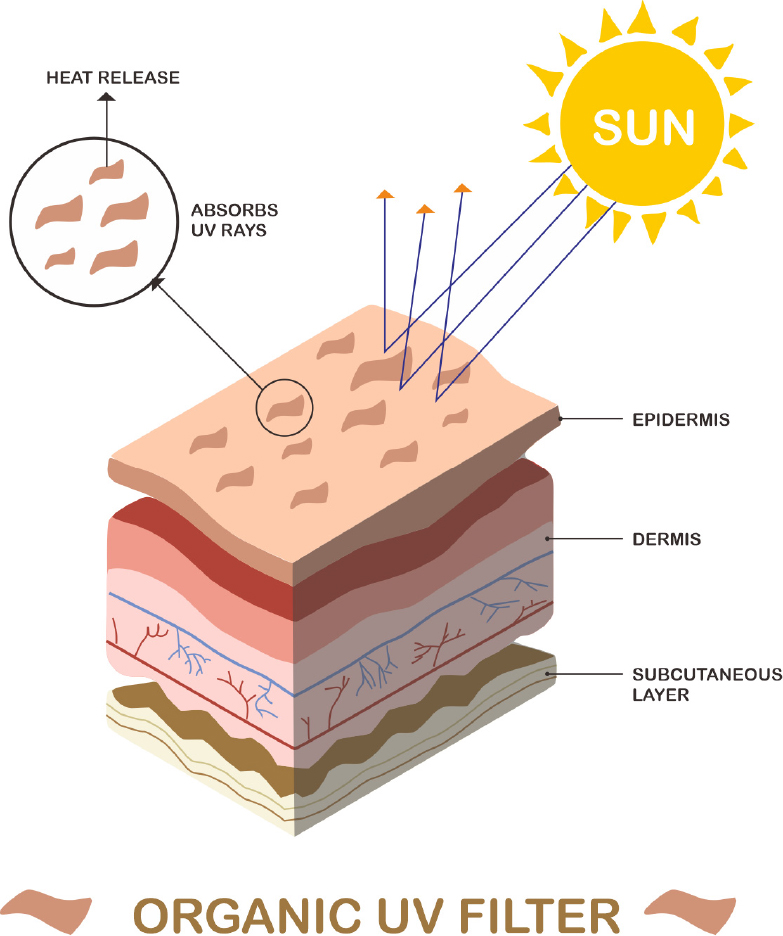
Table 1.
3.2. Inorganic compound based sunscreen
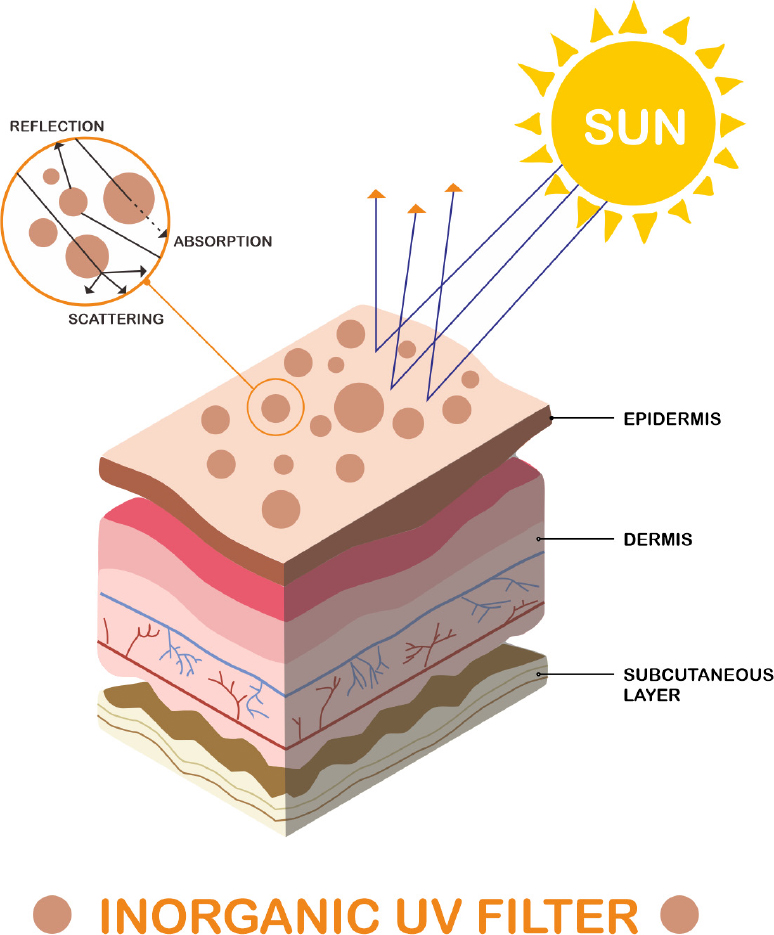
Inorganic compound-based sunscreens are agents that scatter and reflect UV rays into the environment, providing physical barriers.31) They contain for examples: zinc oxide (ZnO) and titanium dioxide (TiO2). Furthermore, these compounds offer UV protection mainly through radiation absorption, as shown in Fig. 3. Their average UV reflection range is only 4~5 %, thereby providing minimal protection through the reflection mechanisms.34)
Inorganic compound-based are less desirable because of their opaque quality but could be accepted with improvement.29) This can be achieved by adding iron oxide pigment (Fe2O3) to impart a brown color to the sunscreen products.35) Furthermore, micro-sized TiO2 and ZnO are increasingly being replaced by their nanoparticles to overcome sunscreens’ low opacity, making them appear more cosmetically pleasing.36)
TiO2 particles of 200~400 nm have useful properties for catalysis applications, UV protectants, and photocatalysts which can be required to scatter visible light to make it appear white.37) Regardless of the particle size, the safety of TiO2 as a UV filter with concentrations up to 25 % in cosmetic products can be considered safe for side effects. This was adopted by the Scientific Committee on Consumer Safety (SCCP).38)
3.3. Hybrid compound based sunscreen
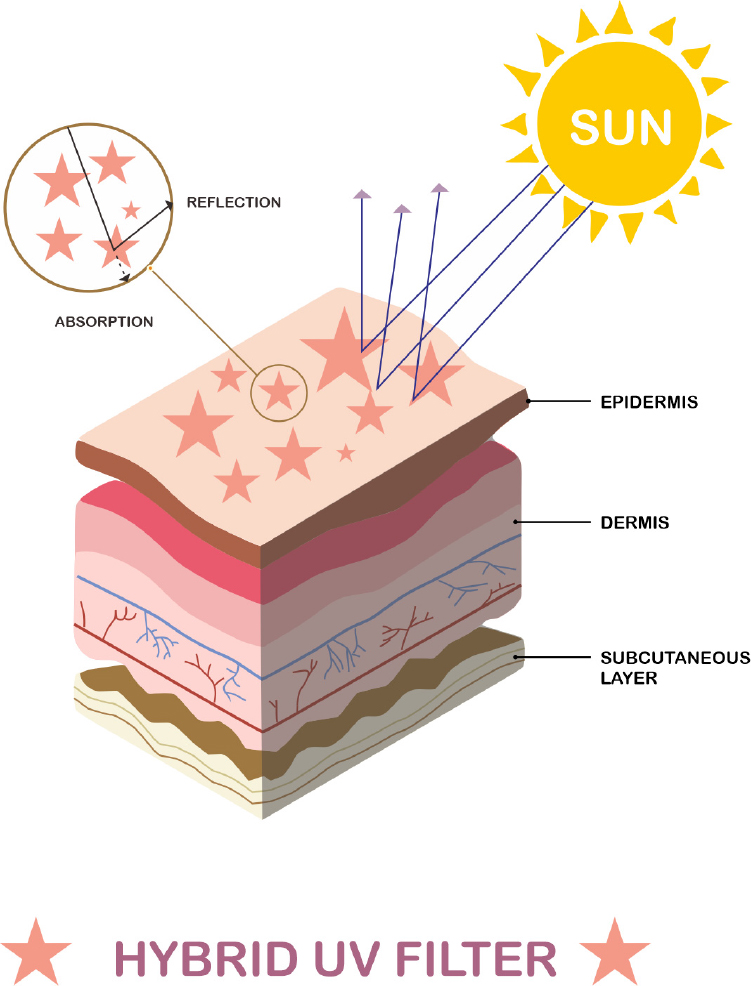
Hybrid compound-based sunscreens are developed as multifunctional products that aim to produce specific benefits and properties such as anti-pollution, anti-aging, and sun protection.39) These hybrid products, which function as UV filters, consist of organic mixed with inorganic compounds on a nanoscale (Fig. 4).40) There are recent discoveries regarding hybrid UV filters. These include organic and mineral UV filters that remain stable in various environments or conditions with high UV protection, water resistance, and broad-spectrum protection.41) A study showed that hybrid nanoparticles consisting of lipids and silica increased sunscreens’ SPF.42)
4. Zeolite Application in Sunscreen Formulation
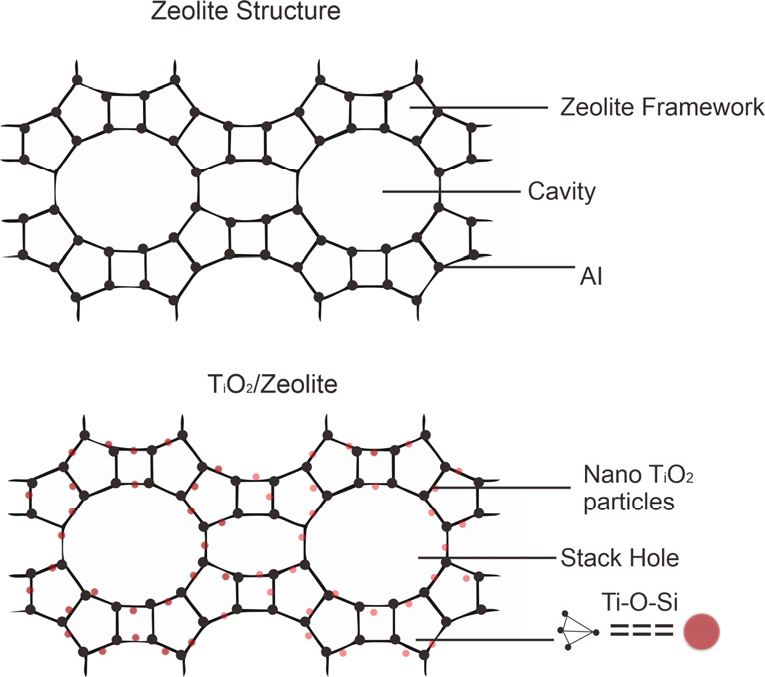
Zeolite is a hydrated aluminosilicate compound found naturally on the soil surface. It has a three-dimensional framework composed of tetrahedral SiO4 and AlO4 with oxygen atoms linking these units.43) Furthermore, it has a porous alumina silica tetrahydrate structure with the chemical formula M8(Si40Al8O96)24H2O, where M is the balancing cation in the zeolite framework. Zeolites have been used for the encapsulation and shielding of UV.43-46) Previous study showed that zinc and titanium zeolites are free radical neutralizers and UV absorbers, hence, can be used in sunscreen applications for skin protection.44)
Many synthetic zeolites have been produced, but the natural type still plays an essential role as they are abundant in nature, specifically in Indonesia. Studies showed that zeolite mineral has high UV absorption and has the same effectiveness as other conventional sunscreens.45) Furthermore, 60~70 % of zeolites in Indonesia are mostly modernite and clinoptilolite.46) The modernite type of natural zeolite is a microporous material that absorbs and diffuses radiations. They explained that there was a strong bond between TiO2 and zeolite in the results of microscopic characterization, as shown in Figs. 5 and 6.47)
5. Application of Nanoclay on Sunscreen Formulation
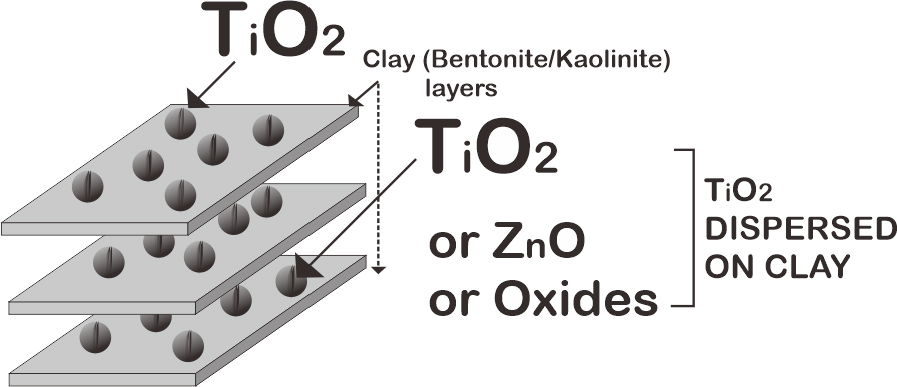
Two-dimensional (2D) nanoclay minerals, including mica, hydrotalcite, kaolinite, and montmorillonite, have been used in skin protection and against UVB-induced photodamage in human skin due to chemical stability, biosecurity, breathability, water-barrier, and physical sun-blocking properties.48-52) The studies showed that nanoclays and lignin have nonflammable UV-protective properties.53) It has been reported that creams containing nanoclays have different absorption levels depending on the Fe2O3 content they contain, which determines their protection ability.54) Sunscreens that contain a certain amount of the mineral bentonite have been shown to absorb the highest levels of rays compared to other commercial types.55) Furthermore, nano clay minerals commonly used in pharmaceuticals and cosmetics are kaolinite, talc, smectite (bentonite), and fibrous clays.56)
Kaolin is predominantly kaolinite, a rock composed of nano clay material with low iron content with the chemical formula Al2Si2O5(OH)4.57) It is soft, usually white or slightly whitish, with a hardness of 2~2.5 on the Mohs scale. Furthermore, kaolin is highly abundant and a safe raw material used in the pharmaceutical and cosmetic industries.58)
A detailed report has been prepared on kaolin, recommending and regulating it for medicinal and cosmetic purposes. Its absorption properties and a large surface area made it desirable and widely used as an agent in product formulation. The literature stated that kaolin is used as a sunscreen agent because it has an adsorbent ability and can adhere to the skin to form a film.59)
6. Application of Layered Double Hydroxide in Sunscreen Formulation
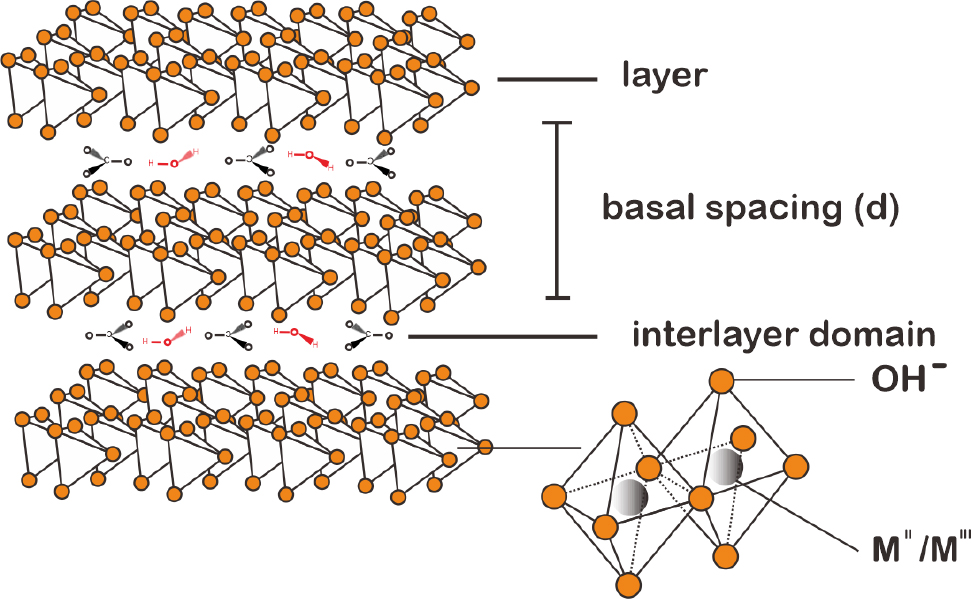
Layered double hydroxide (LDH) is a class of inorganic crystalline materials. It has the chemical formula: [(M²)1-x(M³)x (OH)2]x+(An-x/n) ‧ zH2O. M2+ is a divalent metal cation that M3+ partially replaces, and An represents inorganic anions, as shown in Fig. 7.60)
The encapsulation of sunscreen UV filters in LDH has been reported. The main aim of intercalation of sunscreens into LDH nano galleries has been to enhance their photostability, to increase photoprotection, to prevent dermal contact and impede dermal penetration.63-70)
LDH is safe and provides a suitable matrix for use as a face and body sunscreen formulation for photoprotection.71) In addition, it has been proven that hydrotalcite-type double-coated hydroxide (HTlc) is often applied in cosmetics and a good matrix for sunscreen formulations.72) LDH can be mixed with organic filters or inorganic sunscreen agents such as TiO2 resulting in hybrid sunscreen materials.
7. Sunscreen Regulation
Sunscreen generally has cosmetic marking methods and regulations under state guidelines. The Food and Drug Administration (FDA) has set the UVA regulation in the 2011 FDA final rules, which mandates that sunscreen products should protect with an average critical wavelength value of 370 nm or above.73) It has published final rules defining criteria and procedures to standardize a drug that is generally recognized as safe and effective (GRASE) and not misbranded under the recommended conditions.74) Furthermore, the FDA regulated that sunscreens need to pass an in vitro broad spectrum test to demonstrate that the product can absorb radiation and then include a numerical SPF value resulting from the test (Table 2). The waterproof sunscreen test should also be clearly stated on the label to ensure protection and effectiveness.75)
European countries have a cosmetic industry association called COLIPA, responsible for labeling and examining sunscreen products through a test that evaluates the UVA protection factor (UVAPF) determined by the PPD.76) Based on regulation (EC) No 1223/2009, there are also restrictions on several substances that can be used as dyes, preservatives, and UV filters.77) The Japan Cosmetics Industry Association (JCIA) has its standards. In Japan, labeling is ranked according to the Protection Grade of UVA (PA), namely PA+, PA++, AND PA+++.76)
The Indonesia Food and Drug Supervisory Agency (BPOM) is an official institution in Indonesia supervising the circulation of drugs and food in the country. Sunscreen products have been regulated based on the Guidelines for Technical Requirements. The requirements for cosmetics for sunscreen preparations should include and state mandatory warnings, recommended warnings, how to use the product, prohibited claims, allowed claims, and the product’s Sun Protection Factor (SPF) value.
Table 2.
Sun Protection Factor (SPF) values listed on Sunscreen Cosmetics.78)
| Level | SPF value |
| Low | ≥6 ~ <15 |
| Medium | ≥15 ~ <30 |
| High | ≥30 ~ <50 |
| Very high | ≥50 |
8. Conclusion
Sunscreen is an essential cosmetic product that protects the skin from exposure to harmful UV rays. The harmful effects of long-term radiation are melanoma and non-melanoma cancers. Due to the harmful effects of UV rays, sunscreen formulations must continue to evolve to give optimum protection and an aesthetically pleasing finish to the skin upon which they are applied. Cosmetic marking methods and regulations that exist in each country are set based on guidelines to regulate safety, use, and distribution.
Sunscreen formulation is evolving with ever more advanced technological developments to improve product quality and safety. Greater sunscreen products, both organic, inorganic, and hybrid, are continuously being developed to provide maximum UV protection. Therefore, this study discussed the potential of zeolite, clay, kaolin, and LDH in sunscreen formulations due to their natural abundance.