


1. Introduction
2. Experimental Procedure
2.1. Materials
2.2. Sample Preparation and Mixing Ratio
2.3. Test Method
3. Results and Discussion
3.1. Standard Consistency W/H
3.2. Compressive strength
3.3. Softening Coefficient
3.4. Water Absorption Rate
3.5. XRD analysis
3.6. Infrared Testing
3.7. Thermal Analysis
3.8. Microstructural Analysis
3.9. Mechanism Analysis
4. Conclusion
1. Introduction
Phosphogypsum is a solid waste product generated during the wet-process production of phosphoric acid in the phosphate fertilizer industry,1,2,3,4) primarily composed of CaSO4・2H2O (with a content of approximately 90 %). For every 1 ton of phosphoric acid produced via the wet process, 4 to 5 tons of phosphogypsum are discharged.5) Currently, over 150 million tons of phosphogypsum are discharged globally each year, while China’s annual phosphogypsum output stands at around 80 million tons.6,7) Industrial and agricultural production increasingly demands phosphoric acid, ammonium phosphate, and superphosphate. However, ammonium phosphate and superphosphate are manufactured using phosphoric acid as a raw material.8,9,10) This accelerates phosphate fertilizer production, requiring greater phosphoric acid consumption while simultaneously generating more phosphogypsum. The primary raw materials for wet-process phosphoric acid production are phosphate rock and sulfuric acid,11,12) with the specific reaction Eq. (1) as follows:
Many disposal methods involve simply piling it up or directly burying it underground. Such indiscriminate dumping not only consumes vast amounts of land resources but also severely pollutes the surrounding ecological environment.13,14) Therefore, with the rapid development of the global economy, the resource utilization, harmless treatment, and sustainable development of phosphogypsum as a major solid waste have become critical global challenges.15,16) Accelerating the resource utilization of phosphogypsum and transforming waste into valuable resources is now an urgent task. Consequently, utilizing phosphogypsum to produce building materials such as gypsum board, foam gypsum, and gypsum mortar represents a highly promising application method.17,18,19)
Nano-silica is an inorganic chemical material commonly known as white carbon black. Due to its ultra-fine nanoscale size, it possesses numerous unique properties.20,21,22) For instance, nano-silica exhibits UV resistance, enabling its widespread application in coatings, plastics, rubber, paints, inks, paper, and other materials. Additionally, nano-silica enhances the strength, chemical resistance, and aging resistance of other materials, making it highly versatile.13,23,24) Silica appears as an amorphous white powder that is non-toxic, odorless, and non-polluting. Its microscopic structure consists of spherical particles forming a flocculent and reticular agglomerate structure.25) With the molecular formula SiO2, it is insoluble in water. With the rapid development of infrastructure construction, numerous scholars have investigated the effects of incorporating nanomaterials into cementitious materials. Among them, Li et al.14)conducted systematic research on the effects of nano-calcium carbonate and nano-silica on concrete. Adding either nanomaterial—nano-calcium carbonate or nano-silica—alone to concrete significantly enhances its early strength.26) When both nanomaterials were added together, not only did the early strength of concrete increase significantly, but the later strength also showed a marked improvement. Cao et al.16) studied the addition of nano-silica to ultra-high performance concrete. The results indicated that nano-silica could enhance the strength and toughness of ultra-high performance concrete, with higher dosage leading to greater compressive and flexural strength of the specimens, Guo et al.27) investigated the permeability resistance and freeze-thaw resistance of concrete after adding nano-silica. Results indicated that incorporating nano-silica significantly improved the concrete’s permeability resistance and freeze-thaw resistance. Du et al.28) incorporated nanomaterials and fly ash into concrete and experimentally investigated its permeability resistance, determining the optimal dosages of both nanomaterials and fly ash. While existing research has yielded certain results, studies on the effects of nanomaterials on concrete shrinkage and cementitious materials remain insufficient.29,30) In recent years, scholars worldwide have extensively studied nano-silica-related nanomaterials, primarily combining them with cement concrete to enhance concrete properties.31,32,33) However, research on integrating nano-silica with building gypsum remains relatively scarce. This stems partly from the unique properties of building gypsum and partly from the limited depth of current gypsum research. Phosphogypsum possesses numerous advantages, yet its common drawback is poor water resistance—it softens readily upon water absorption, significantly hindering its development and application.34,35) Given the extensive use of phosphogypsum in green construction, this study delves into the characteristics of gypsum and explores the incorporation of inorganic materials into gypsum. This research aims to enhance the resource utilization value of phosphogypsum as an industrial byproduct.36,37)
This paper primarily investigates the effects of nano-SiO2 particles with varying particle sizes on the hydration product system of hemihydrate gypsum. Utilizing phosphogypsum as raw material for novel cementitious materials not only effectively addresses gypsum recycling issues but also enables the production of gypsum blocks. The process involves calcining phosphogypsum to produce hemihydrate gypsum, which is then combined with silica particles of different sizes to fabricate gypsum blocks. First, phosphogypsum was pretreated to produce hemihydrate gypsum, which was then incorporated into gypsum blocks with varying water-to-gypsum ratios. The optimal water-to-gypsum ratio for mechanical properties was determined. Using this ratio as a baseline, various silica fume contents with different particle sizes were added for modification studies. This approach identified the optimal silica fume content and particle size to enhance the strength of gypsum blocks formed through the hydration and hardening of hemihydrate gypsum, ultimately yielding high-quality gypsum block products.
2. Experimental Procedure
2.1. Materials
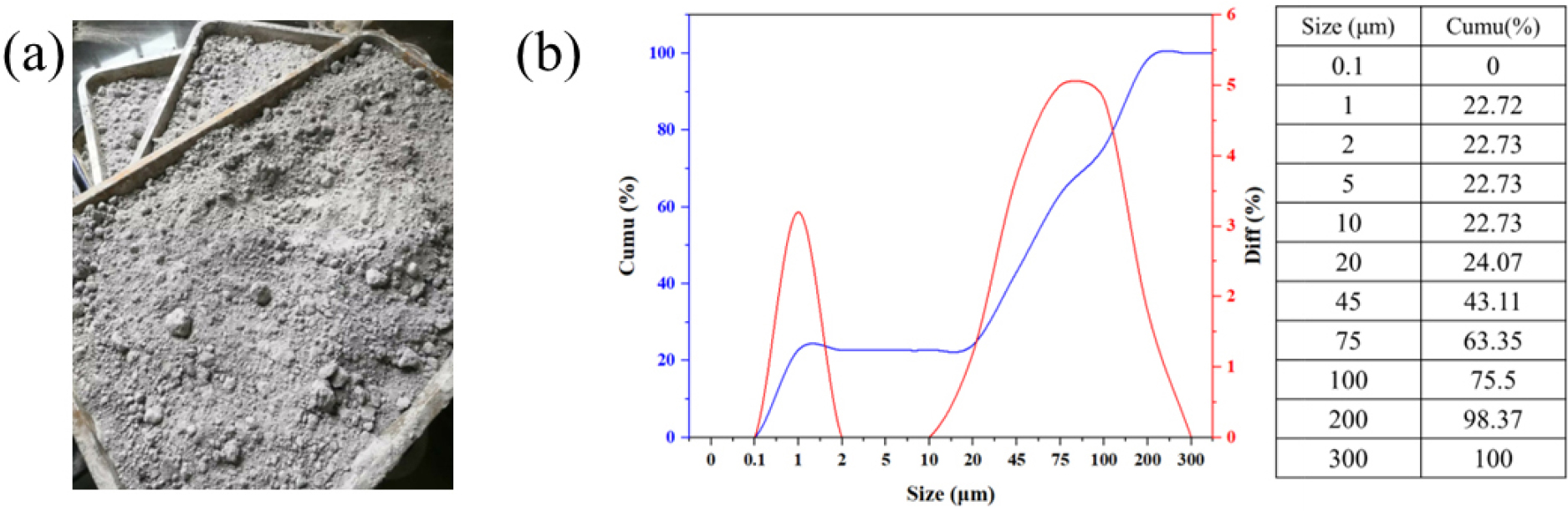
Raw phosphogypsum (PG) sourced from China Salt Anhui Hongsifang New Building Materials Technology Co., Ltd. undergoes pretreatment to produce hemihydrate gypsum. The hemihydrate gypsum appears as a gray powder, with its primary chemical composition being calcium sulfate dihydrate. Its primary chemical composition includes silica, sulfur tri oxide, and acid-insoluble matter, along with trace amounts of organic compounds, phosphorus pentoxide, fluorine, magnesium oxide, iron oxide, sodium oxide, aluminum oxide, and potassium oxide as shown in Table 1. The powder appearance is shown in Fig. 1.
Table 1.
Primary chemical composition of hemihydrate gypsum
| Sample | F | Na2O | MgO | Al2O3 | SiO2 | P2O5 | SO3 | K2O | CaO | TiO2 | Fe2O3 |
| (%) | 1.1 | 0.12 | 0.07 | 0.80 | 9.21 | 1.09 | 50.13 | 0.48 | 35.74 | 0.17 | 0.85 |
Analysis of gypsum particle size characteristics using a particle size analyzer yielded the results shown in Fig. 1(b), indicating that: Gypsum particle sizes exhibit a normal distribution in the ranges of 0.1-1.0 µm and 10.0-310.0 µm. The primary distribution occurs between 13 and 310 µm, with an average particle size of 64.12 µm. Particles smaller than 240.3 µm constitute 99.78 % of the total.
The primary distinction between phosphogypsum and desulfurization gypsum or natural gypsum lies in the higher silica content present in hemihydrate gypsum pretreated with phosphogypsum, coupled with the absence of heavy metal elements. According to GB/T5483-2008 (requiring calcium sulfate dihydrate content exceeding 75 % for building gypsum) and GB/T6566-2010 (radiation limits for building materials), this gypsum qualifies as building material gypsum and can be used to produce β-hemihydrate gypsum.
The ultrafine silica particles used in this experiment had particle sizes of 15 nm, 30 nm, 50 nm, 500 nm, and 2 µm. All were white powder particles supplied by Shanghai MacLean Biochemical Technology Co., Ltd.
2.2. Sample Preparation and Mixing Ratio
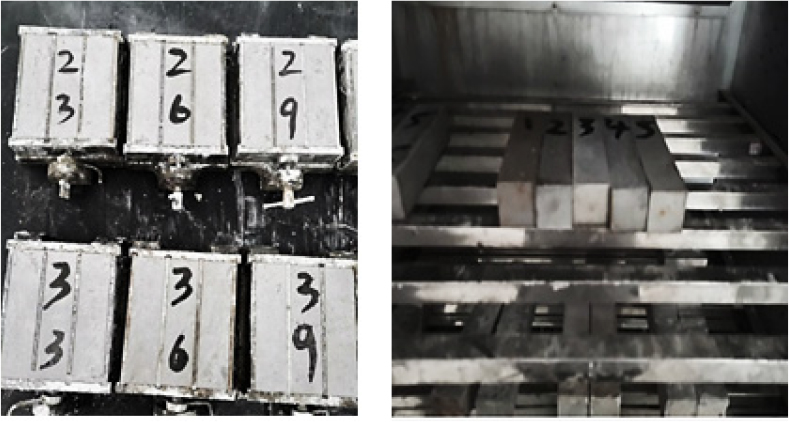
By calcining raw phosphogypsum at 160 °C to produce hemihydrate gypsum, followed by grinding, particles meeting the particle size and gradation requirements for hemihydrate gypsum as a cementitious material were prepared. Different amounts of silica with varying particle sizes were blended into the hemihydrate gypsum at 0 %, 0.3 %, 0.6 %, 0.9 %, 1.2 %, and 1.5 %. This experimental protocol is shown in Table 2. The silica particles were first mixed with water at standard consistency and thoroughly stirred. Finally, pour the thoroughly mixed solution into the mixing pot containing hemihydrate gypsum. After mixing, stir rapidly for 30 s before molding. Pour the mixed gypsum slurry into a 40 mm × 40 mm × 160 mm triple mold. Vibrate using a cement mortar vibrating table for 20-30 s, then scrape off excess slurry with a file to ensure a smooth mold surface. After completion, mark the mold surface for testing and record the test details shown in Fig. 2. Place the formed triple mold in a constant temperature and humidity curing chamber.
Table 2.
Experimental protocol.
2.3. Test Method
2.3.1. Standard Water Consumption Test
According to GB/T 17669.4-1999, the water/hemihydrate gypsum (W/H) ratio required for standard consistency is calculated. To assess flowability, a stainless steel mold measuring 50 mm (inner diameter), 60 mm (outer diameter), and 100 mm (height) is employed. When the flowability of the mixed plaster containing different types of water-resistant materials reaches 180 ± 5 mm, its water consumption is recorded as the water requirement for standard consistency.
2.3.2. Mechanical strength
The compressive strength of mixed gypsum incorporating various waterproofing materials was tested in accordance with Chinese standard GB/T 17669.3-1999. A domestically produced Sansi automatic compression machine was employed at a loading rate of 600 N/s. For each formulation, three prismatic specimens with dimensions of 40 mm × 40 mm × 160 mm were prepared. The specimens were first cured for one day under standard conditions (20 ± 2 °C, 90 ± 5 % RH), and then dried at 45 ± 5 °C to constant weight.
2.3.3. Water Absorption Rate and Softening Coefficient
The specimen preparation method for water absorption tests is identical to that for compressive strength tests. After standard curing for 3 days, specimens are dried at 45 ± 5 °C to constant weight, then immersed in water for 24 h. Water absorption is calculated using Eq. (2).
In the formula, M1 represents the mass of the sample after drying to constant weight, and M2 represents the mass of the sample after soaking in water for 24 h. To evaluate the water resistance of the plaster body, the detached plaster body was fully immersed in water at room temperature for 1 day, followed by immediate measurement of the compressive strength of the water-absorbed plaster paste. According to GB/T 5486-2008, the softening coefficient is a crucial metric that characterizes water resistance and can be calculated using Eq. (3).
Where K is the softening coefficient, f and F represent the water absorption compressive strength and dry compressive strength of the gypsum paste, respectively (MPa).
2.3.4. XRD analysis
Based on the W/H ratio for standard consistency obtained in Section 2.3.1, prepare mixed gypsum slurries with varying dosages and types of waterproofing materials. After the corresponding hydration time, dry at 45 ± 5 °C, grind into powder (passing through a 200-mesh sieve), and perform X-ray diffraction (XRD) analysis. Analysis was performed using a German D8 Advance X-ray diffractometer with an X-ray spectrum generated by a Cu target. The scanning rate was 25 ᵒ/min.
2.3.5. Infrared Testing
Fourier transform infrared spectroscopy (FTIR) was employed to characterize the adsorption of polymethylhydrosiloxane, hypromellose, and calcium sulphoaluminate cement on the surface of gypsum paste. The wavenumber range was 500-4,000 cm-1.
2.3.6. Thermogravimetric Analysis - Differential Scanning Calorimetry (TG-DSC) analysis
The thermal properties of the specimens were analyzed using a simultaneous thermal analyzer (STA449F3, Germany) under a nitrogen-protected atmosphere. During testing, the temperature was raised from 30 °C to 400 °C at a heating rate of 10 °C/min.
2.3.7. Scanning Electron Microscopy (SEM) analysis
The microstructure of hydrated mixed gypsum was investigated via scanning electron microscopy (Zeiss EV018, 15 kV). Samples with a curing age of 3 and 28 days were obtained from the inner fracture surface and prepared into fragments of roughly 2 mm. Prior to testing, all specimens were coated with gold to ensure their electrical conductivity. Magnified images of the specimens were captured using a scanning electron microscope.
3. Results and Discussion
3.1. Standard Consistency W/H
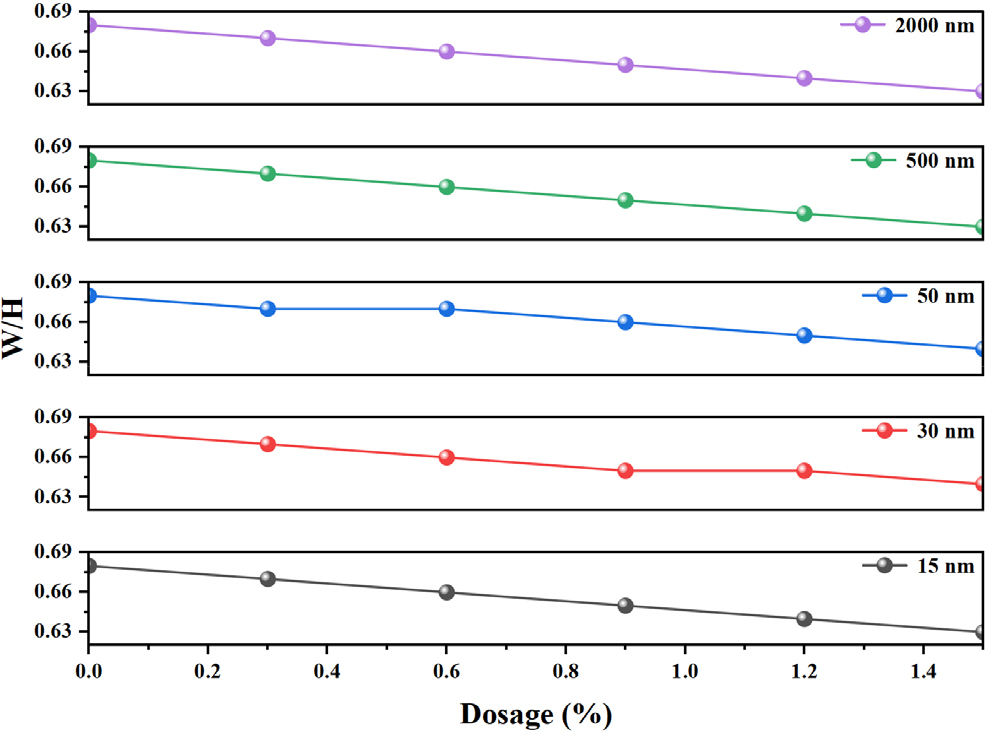
Fig. 3 shows the effect of ultrafine SiO2 with different particle sizes on the standard consistency water requirement (W/H) of β-hemihydrate gypsum (β-HPG). The experimental results indicate that the incorporation of ultrafine SiO2 significantly reduces the water requirement for standard consistency in the gypsum system, and this reduction becomes more pronounced as the SiO2 content increases. Specifically, as the content of ultrafine SiO2 of different particle sizes gradually increases, the water requirement for standard consistency in the system decreases overall from 0.68 in the reference group to approximately 0.63-0.64. This trend is primarily attributed to the following two mechanisms: First, nano-sized SiO2 particles possess high surface activity and exhibit a micro-filler effect, effectively filling the voids between gypsum particles and optimizing the particle size distribution. This releases some of the free water originally required for filling, thereby reducing the system’s water demand. On the other hand, SiO2 particles act as physical lubricants in the slurry, similar to “ball bearings,” improving the slurry’s flowability and consequently reducing the water requirement for standard consistency. In summary, the incorporation of ultrafine SiO2 exhibits a significant water-reducing effect on the β-HPG system, helping to optimize the workability and microstructure of gypsum-based materials.
3.2. Compressive strength
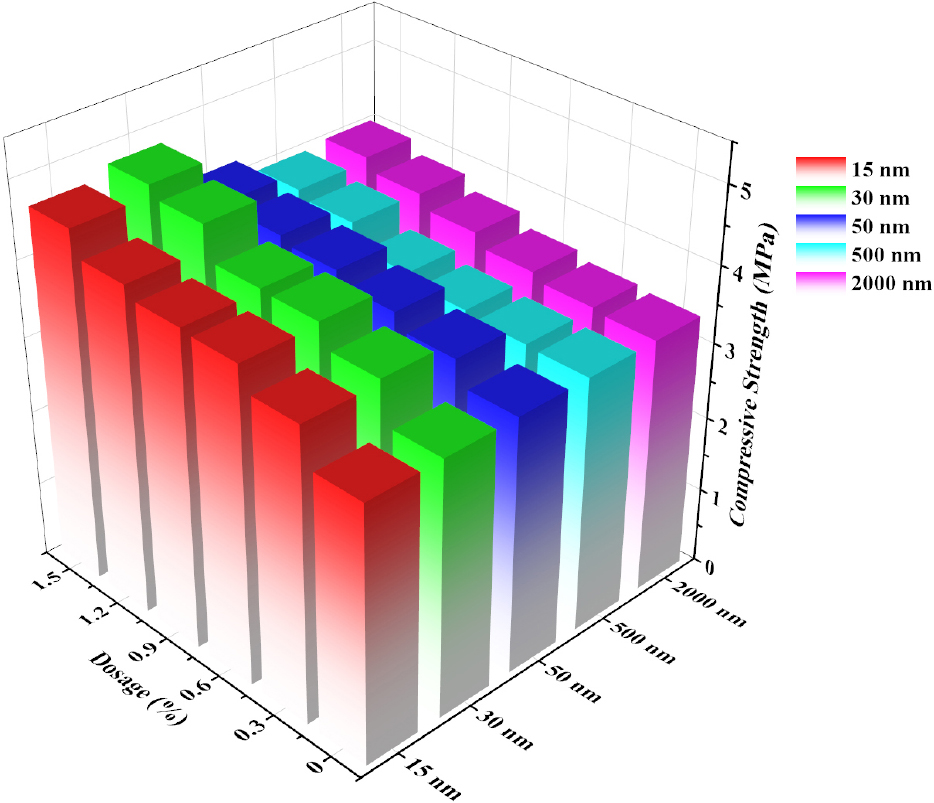
SiO2 particles of different sizes were added to gypsum slurry at concentrations of 0 %, 0.3 %, 0.6 %, 0.9 %, 1.2 %, and 1.5 %. After thorough mixing in the gypsum slurry, the mixture was molded and cured for 2 h, followed by mechanical testing. Fig. 4 illustrates the effect of ultrafine SiO2 with different particle sizes (15 nm to 2 µm) and different incorporation levels (0 % to 1.5 %) on the compressive strength of hardened β-hemihydrate gypsum. The test results indicate that the incorporation of ultrafine SiO2 significantly enhances the mechanical properties of the gypsum matrix, and this effect exhibits clear dependence on both particle size and incorporation level. Overall, as the ultrafine SiO2 content increased, the compressive strength of all test specimens showed an upward trend. When the content reached 1.5 %, all particle size groups achieved the maximum compressive strength in this series. Specifically, the blank control group (0 % content) exhibited a 28-day compressive strength of 3.38 MPa, whereas the specimen containing 1.5 % of 30-nm SiO2 reached a peak strength of 4.79 MPa—an increase of approximately 41.7 % compared to the control group, representing the most significant enhancement effect.
When comparing the reinforcing effects of different particle sizes at the same loading level (1.5 %), analysis of the microstructural mechanisms reveals that these differences are primarily attributable to the following three factors:
First, ultrafine SiO2 (particularly nanoparticles) can effectively fill the microscopic pores and interfacial transition zones between gypsum hydration products, optimizing particle size distribution. This results in a denser structure of the hardened paste, reduces internal defects, and thereby enhances macroscopic mechanical properties. Second, nano-SiO2 possesses extremely high surface energy, serving as nucleation sites for hydration products, promoting the formation of ettringite or C-S-H gel, and improving the crystallization morphology and interfacial bonding strength of the hydration products. Although gypsum systems differ from cement systems, the “pinning effect” induced by ultrafine particles similarly helps refine crystal size and strengthen the structural framework. Finally, the compressive strength data indicate that smaller particle sizes do not necessarily yield better reinforcement effects. The reinforcement effect of 15 nm SiO2 is slightly lower than that of 30 nm, likely because when particle sizes are too small (< 20 nm), the particles are highly prone to agglomeration. When mechanical mixing cannot fully disperse them, these agglomerates may introduce new structural defects (stress concentration points), thereby offsetting the nano-effect. Meanwhile, submicron and micron-sized particles (500 nm and 2 µm), although they provide acceptable filling effects, exhibit significantly lower surface activity than nanoparticles and lack chemical bonding strength, resulting in limited reinforcement effects. In summary, under the experimental conditions of this study, 30-nm ultrafine SiO2 at a 1.5 % loading level demonstrated the optimal reinforcement effect, most effectively optimizing the microstructure of the hardened gypsum and enhancing its mechanical properties.
Fig. 5 shows the effect of ultrafine SiO2 with different particle sizes (15 nm-2 µm) and loading levels (0 %-1.5 %) on the compressive strength of hardened β-hemihydrate gypsum after 3 days of curing, both in a dried state and after softening by soaking in water. The test results indicate that the incorporation of ultrafine SiO2 significantly enhances the mechanical properties of the gypsum matrix, and this effect exhibits different patterns under different moisture conditions (dry and saturated). In the dried state, the compressive strength of all test specimens showed an upward trend with increasing ultrafine SiO2 content. When the content reached 1.5 %, all particle size groups achieved the maximum strength values in this series. Specifically, the dried compressive strength of the blank control group (0 % content) was 8.65 MPa, while the specimen containing 1.5 % of 30-nm SiO2 reached a peak strength of 10.49 MPa, representing an increase of approximately 21.3 % compared to the control group, demonstrating the most significant enhancement effect.
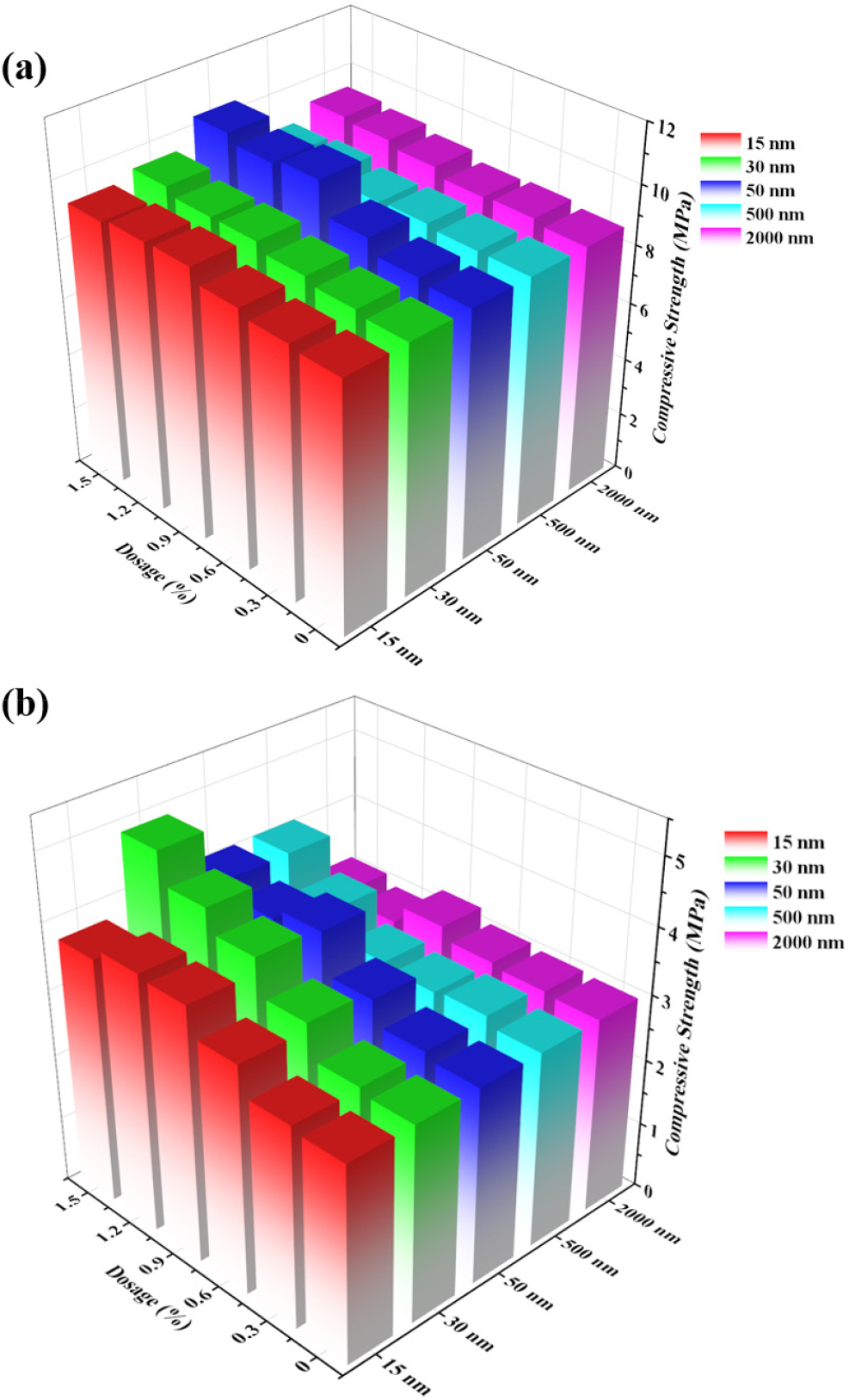
When comparing the reinforcing effects of different particle sizes at the same dosage (1.5 %), nano-sized SiO2 (particularly 30 nm) is most effective at optimizing the microstructure of hardened gypsum in the dry state. Nano-SiO2 particles exhibit a micro-filler effect, effectively filling the micro-pores between gypsum crystals to increase density; simultaneously, their high surface activity serves as nucleation sites for hydration products, improving the interwoven structure of crystal growth and thereby enhancing structural strength in the dry state. It is worth noting that the reinforcing effect of 15 nm SiO2 is actually lower than that of 30 nm. This may be because when the particle size is too small (< 20 nm), the surface energy of the particles is extremely high, making it difficult to completely overcome agglomeration even under mechanical mixing conditions. Although agglomerates can provide some filling effect in the dry state, their internal bonding strength is weak, limiting the full realization of the nano-effect.
After water immersion treatment, the strength of all specimens decreased significantly, which is consistent with the fundamental principle of water-softening in gypsum materials. The strength of the blank group decreased from 8.65 MPa to 2.98 MPa, with a softening coefficient of approximately 0.34. Upon incorporation of ultrafine SiO2, the strength in the softened state also increased with the addition level, and the strengthening effect was even more pronounced. At a 1.5 % blend ratio, the water-soaked strength of the 30 nm SiO2 group increased by 63.4 % compared to the blank group, and the softening coefficient rose to 0.46, indicating that it had the most pronounced effect on improving the water resistance of gypsum. The 30 nm SiO2 exhibited the optimal strengthening effect under various moisture conditions. This confirms that nanoparticles of an appropriate particle size can simultaneously optimize both dry strength and water resistance. The mechanism lies in the fact that 30 nm particles can effectively fill micro-pores while promoting the formation of a denser crystalline network structure, thereby increasing dry strength and, to a certain extent, inhibiting the erosion of crystalline contact points by moisture. The particle size effect varies under different moisture conditions. The 500 nm SiO2 group demonstrated outstanding water resistance. Although this particle size group exhibited the lowest strength in the dried state, its strength after water immersion was second only to the 30 nm group, with a softening coefficient of 0.46, comparable to that of the 30 nm group. This indicates that although submicron particles contribute limited dry strength due to their lower surface activity, they are distributed more uniformly within the matrix, effectively filling capillaries and blocking moisture migration pathways, thereby significantly improving water resistance. This phenomenon suggests that in an optimized design balancing dry strength and water resistance, the composite addition of nano- and submicron particles should be considered. The 2 µm SiO2 exhibited the weakest reinforcing effect, particularly in the water-soaked state, where its performance was only slightly higher than that of the blank group. This is attributed to the fact that although micron-sized particles possess a certain degree of filling effect, they lack chemical reactivity and struggle to form a robust interface with the gypsum matrix; consequently, the interfacial transition zone easily becomes a weak point upon contact with water.
In summary, the choice of particle size for ultrafine SiO2 has a decisive impact on its reinforcing effect: 30-nm particles perform best in optimizing dry strength and water resistance; while 500-nm particles offer only a limited improvement in dry strength, they provide excellent water resistance; conversely, particles that are too small (15 nm) or too large (2 µm) are limited in their effectiveness due to agglomeration or insufficient reactivity. In practical applications, the appropriate particle size should be selected based on performance requirements, or a multi-size grading blending strategy should be adopted.
3.3. Softening Coefficient
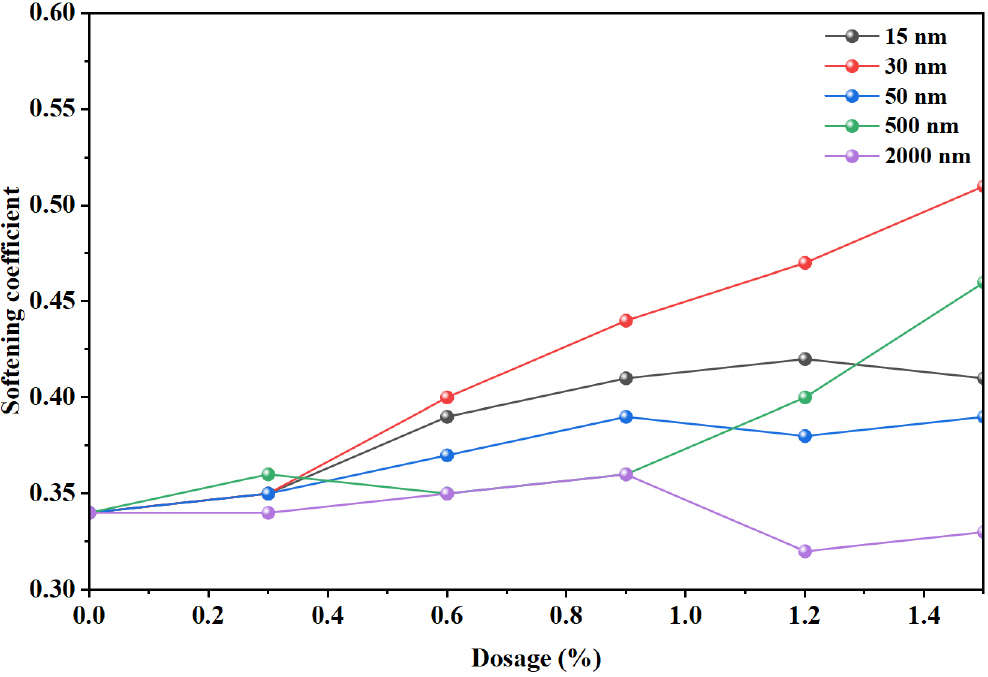
The softening coefficient is a key indicator for evaluating a material’s water resistance; it is defined as the ratio of the compressive strength of the material in a saturated state to that in a dry state. A higher value indicates superior water resistance. Fig. 6 illustrates the influence of ultrafine SiO2 with different particle sizes (15 nm-2 µm) and loading levels (0 %-1.5 %) on the softening coefficient of hardened β-hemihydrate gypsum. The test results indicate that the incorporation of ultrafine SiO2 significantly improves the water resistance of the gypsum matrix, and this improvement exhibits clear dependence on both particle size and content. Overall, as the content of ultrafine SiO2 increases, the softening coefficients of all test specimens show an upward trend. When the content reaches 1.5 %, all particle size groups achieve the maximum softening coefficient values in this series. A comparison of the softening coefficients for different particle sizes at the same incorporation level (1.5 %) is shown. Among these, the specimen incorporating 1.5 % of 30-nm SiO2 achieved a peak softening coefficient of 0.51, representing an approximately 50 % increase compared to the blank control group (estimated at approximately 0.34 based on previous data), demonstrating the most significant improvement. 30 nm SiO2 is the optimal particle size for optimizing the water resistance of gypsum, as it plays a positive role in both physical filling and chemical reinforcement, simultaneously improving both dry strength and softening coefficient. The improvement in water resistance is not entirely positively correlated with the increase in dry strength. The case of 500 nm SiO2 demonstrates that even with limited increases in dry strength, effective physical filling can still significantly improve the softening coefficient. This suggests that in the design optimization of water resistance, the pore-filling effect of submicron-sized particles should be given due consideration.
3.4. Water Absorption Rate
Water absorption is a key macroscopic indicator of a material’s porosity and density; its value directly reflects the extent of interconnected pores within the hardened body, thereby influencing the material’s water resistance and durability. Fig. 7 illustrates the influence of ultrafine SiO2 with different particle sizes (15 nm-2 µm) and loading levels (0 %-1.5 %) on the water absorption of β-hemihydrate gypsum hardened bodies. The test results indicate that the incorporation of ultrafine SiO2 has a significant inhibitory effect on the water absorption properties of the gypsum matrix, and this effect exhibits clear dependence on both particle size and content. Overall, as the content of ultrafine SiO2 increases, the water absorption rates of all test specimens show a continuous downward trend, indicating that the density of the hardened body continuously improves and the number of interconnected pores gradually decreases. The water absorption rate of the blank control group (0 % content) was 38.1 %, a value reflecting the inherent porous nature of pure gypsum hardened bodies. When the ultrafine SiO2 content reached 1.5 %, all particle size groups achieved the lowest water absorption rates in this series. A comparison of water absorption rates for different particle sizes at the same content (1.5 %) is shown below. Among these, the sample containing 1.5 % of 30-nm SiO2 particles exhibited the lowest water absorption rate of 25.87 %, a 32.1 % reduction compared to the blank group, demonstrating the most significant improvement. The inhibitory effect of ultrafine SiO2 on gypsum water absorption primarily stems from the following microscopic mechanisms: ultrafine SiO2 particles effectively fill the micropores and capillary channels between gypsum crystals. During their growth, dihydrate gypsum crystals form a large number of intergranular voids; these voids, particularly interconnected ones, serve as the primary pathways for water penetration. The incorporation of nano- and submicron-sized SiO2 particles fills these voids, refining the pore size and blocking pore connectivity, thereby significantly reducing water absorption. Ultrafine particles of different sizes can create a multi-level filling effect within the matrix. Larger particles (e.g., 500 nm) fill coarser pores, while smaller particles (e.g., 30 nm) fill finer pores. This multi-level filling pattern maximizes the bulk density of the hardened body and reduces the total porosity. Nano-SiO2 possesses high surface activity and serves as a nucleation site for hydration products, promoting the formation of a denser, more interwoven network structure in dihydrate gypsum crystals. This optimized crystal morphology not only reduces structural defects during crystal growth but also results in a more uniform and closed-pore distribution, thereby lowering water permeability. 30 nm SiO2 exhibited the best performance (25.87 %): this particle size falls within the optimal filling range at the nanoscale. 30 nm particles can effectively fill the fine pores between micron-sized crystals, possess high surface activity to regulate crystal growth, and are relatively less prone to severe agglomeration. This optimal balance of particle size and activity allows it to most effectively optimize the pore structure of the hardened body, minimizing water absorption.
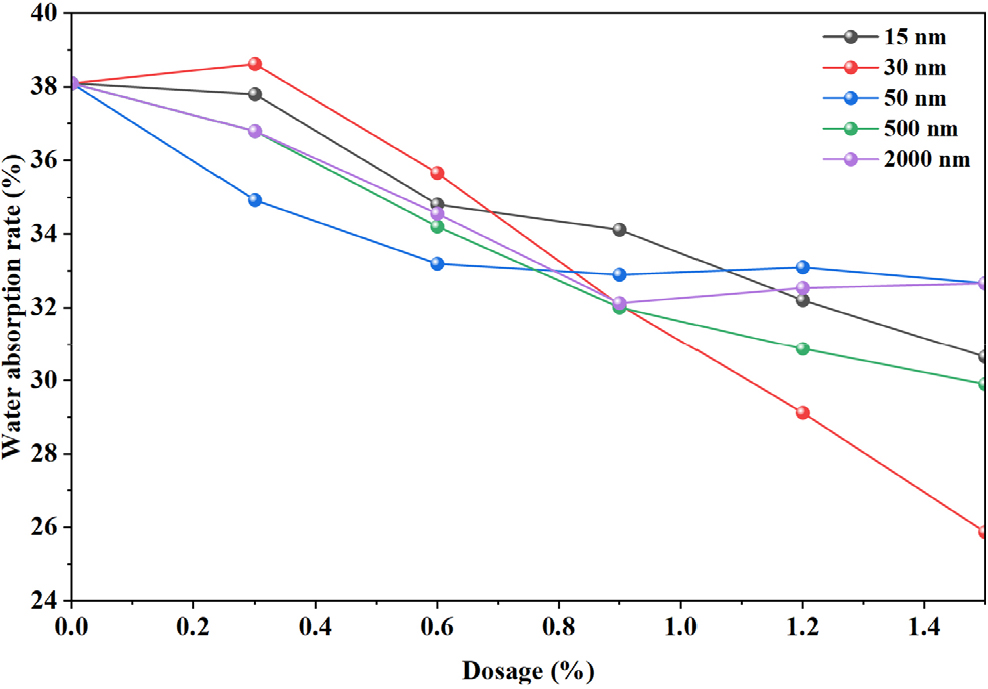
In summary, the incorporation of ultrafine SiO2 significantly reduces the water absorption of hardened gypsum through a dual mechanism of physical filling and microstructural optimization. Under the experimental conditions of this study, 30 nm SiO2 at a 1.5 % loading level demonstrated the optimal pore structure optimization effect, reducing water absorption to 25.87 %, and can be considered a preferred solution for improving the water resistance and density of gypsum-based materials. Although 500 nm SiO2 makes a limited contribution to improving dry strength, its excellent pore-filling capability makes it an effective choice for reducing water absorption and improving water resistance. In practical applications, a composite blend with nanoparticles may be considered to achieve optimal results through multi-level filling.
3.5. XRD analysis
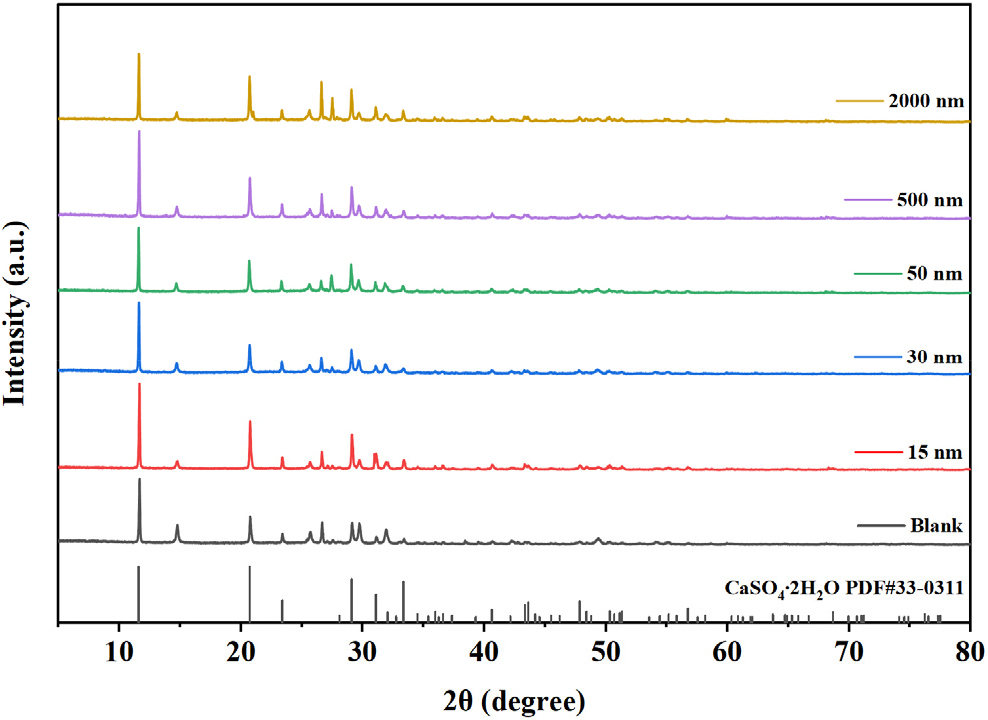
To clarify the formation of dihydrate gypsum crystals and the effect of SiO2 with different particle sizes on the phase composition of the hydration products, XRD analysis was performed on samples cured for 3 days. The results are shown in Fig. 8. As shown in the figure, the diffraction patterns of the hydration products for all six groups of samples are extremely similar. Their characteristic diffraction peaks match those of the standard card for monoclinic dihydrate gypsum CaSO4・2H2O (JCPDS 33-0311) and correspond to the faint diffraction peaks of partial SiO2 (JCPDS 29-0085). The diffraction patterns exhibit stable baselines, with high, sharp peaks and narrow half-widths, indicating good crystallinity of the hydrated products. No diffraction peaks corresponding to hemihydrate gypsum were observed in the diffraction patterns of any sample group, nor were any other impurity peaks present. This indicates that, after 3 days of curing, the hemihydrate gypsum component in the system had fully hydrated and completely transformed into dihydrate gypsum. Based on the analysis results in Fig. 8, it can be concluded that the final phase composition of the hydration products is highly consistent across different samples, consisting entirely of dihydrate gypsum; the incorporation of SiO2 with different particle sizes did not induce the formation of new crystalline phases nor alter the type of gypsum hydration products. Under the conditions of this study, SiO2 primarily acts as a physical filler or inert aggregate. Its modifying effect on the composite gypsum system likely manifests mainly through physical compaction and the provision of nucleation sites, rather than through chemical bonding that alters the crystal structure of the hydration products.
3.6. Infrared Testing
To investigate whether chemical interactions exist between silica particles of different sizes and the composite gypsum matrix, functional group analysis was performed on samples cured to a specified age using FTIR. The results are shown in Fig. 9.
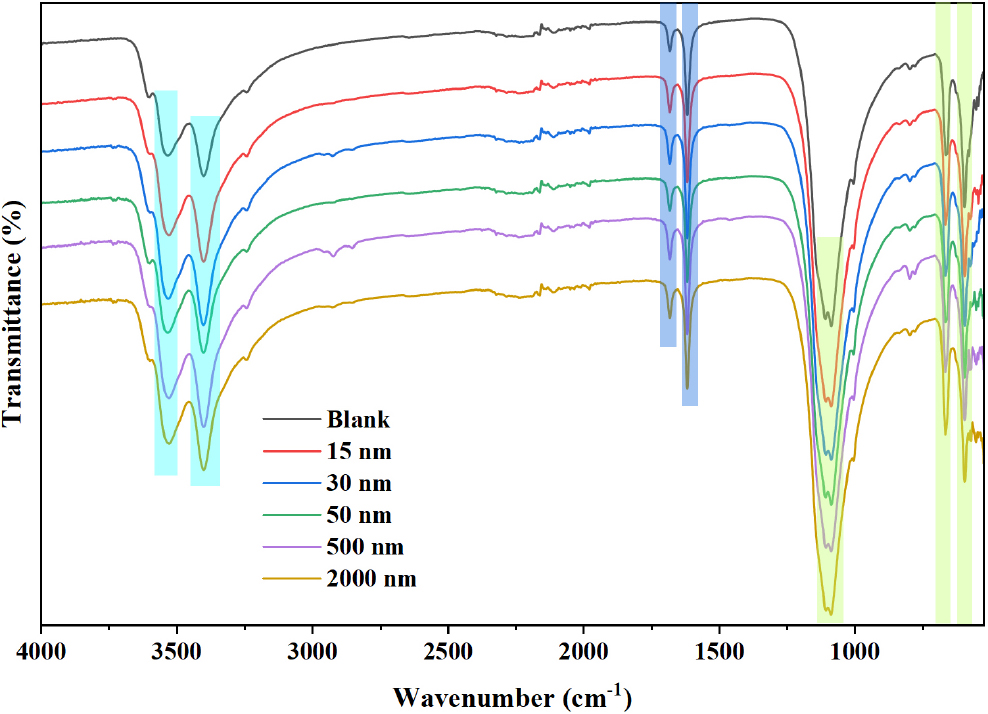
As shown in the figure, the infrared absorption spectra of all gypsum samples doped with SiO2 of different particle sizes exhibit highly similar profiles compared to those of the blank control group. The main absorption peaks of each sample group are located at the following wavenumbers: the peaks at 597 cm-1 and 668 cm-1 can be attributed to the υ4 asymmetric bending vibration of SO42-; the strong absorption bands at 1,089 cm-1 and 1,108 cm-1 correspond to the υ3 asymmetric stretching vibration of SO42-; the absorption peaks at 1,617 cm-1 and 1,684 cm-1 are attributed to the bending vibration of H-O-H in crystalline water; while the broad absorption bands at 3,401 cm-1 and 3,534 cm-1 are attributed to the O-H stretching vibration. Compared with the blank control group, no significant shifts were observed at any of the characteristic peak positions in the gypsum samples doped with SiO2 of different particle sizes, and no new characteristic absorption peaks appeared. This phenomenon indicates that the introduction of SiO2 did not form chemical bonds with the hydration products of hemihydrate gypsum, nor did it induce the formation of new functional groups or chemical bonds. Combined with the XRD analysis results, which showed no detection of new phase formation, this provides mutual corroboration: SiO2 of different particle sizes primarily acts as a physical filler in this system rather than participating in hydration reactions. It can thus be preliminarily inferred that SiO2 particles, owing to their high stability and potential hydrophobic properties, primarily refine the pores and improve the pore structure through physical filling effects. This is likely the main reason why the composite gypsum samples exhibit lower water absorption and higher softening coefficients after SiO2 incorporation.
3.7. Thermal Analysis
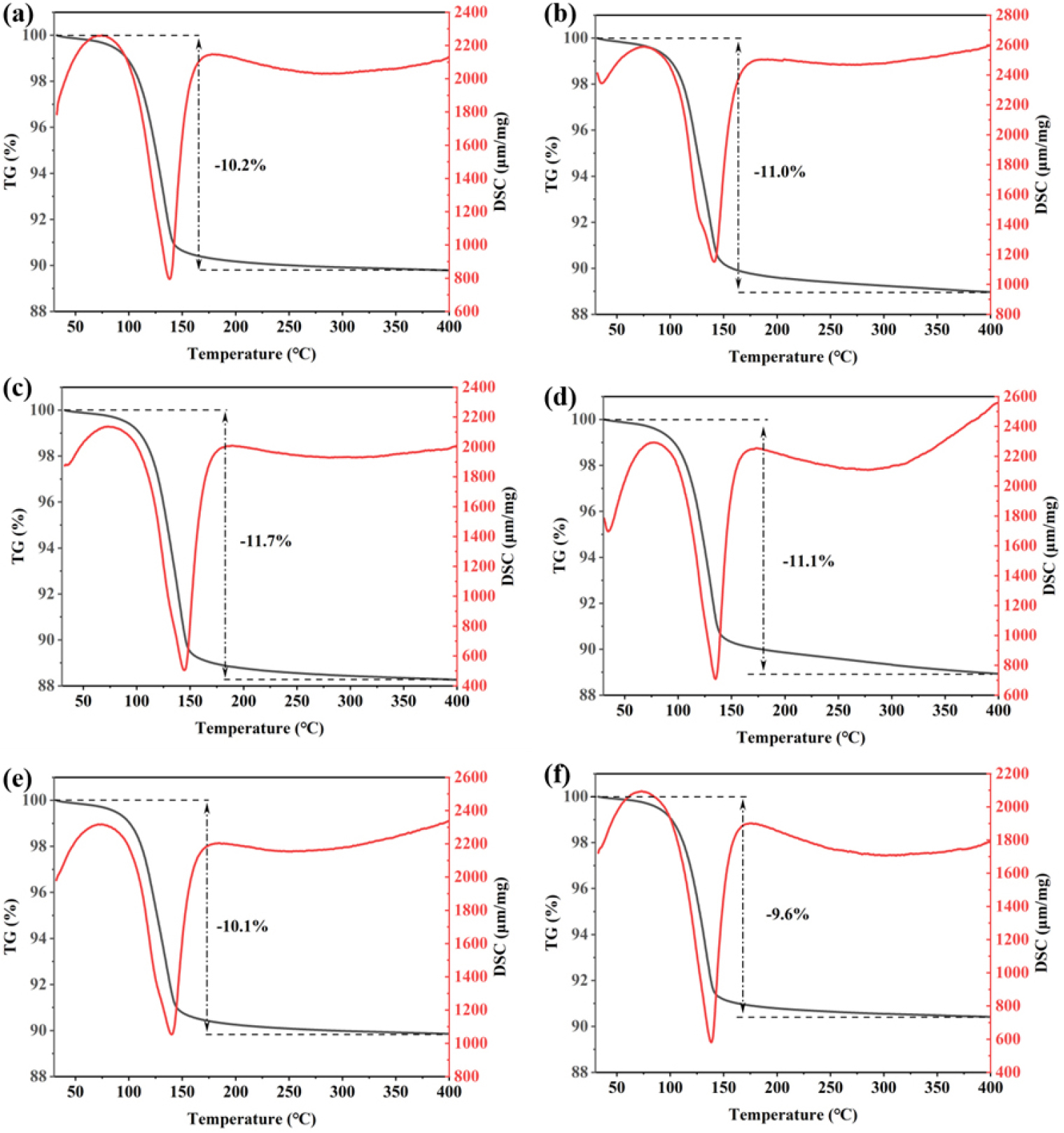
To further quantitatively characterize the effect of different particle sizes of nanosilica on the degree of hydration of composite gypsum, samples cured to a specified age were tested using simultaneous thermal analysis (TG-DSC). The results are shown in Fig. 10. The DSC curves reveal that all samples exhibit a significant endothermic peak near 120 °C. This endothermic effect is attributed to the phase transition of CaSO4・2H2O, during which part of the crystalline water is released, transforming it into CaSO4・0.5H2O. Based on this, the content of dihydrate gypsum in the samples can be quantitatively calculated using the mass loss rate within this temperature range: a higher mass loss rate indicates a higher content of dihydrate gypsum, i.e., a higher degree of hydration in the system. The mass loss rate of the blank control group was 10.2 %. When nano-SiO2 of different particle sizes was added, the mass loss rate of the samples exhibited a trend of first increasing and then decreasing as the particle size increased. A decrease in the mass loss rate implies a reduction in the content of dihydrate gypsum in the hydration products and an inhibition of the degree of hydration. This may be attributed to the hydrophobic properties of the nano-SiO2 particle surface; when the particle size is small, the large specific surface area may affect the diffusion and distribution of water molecules in localized regions, thereby interfering with the hydration process of the surrounding hemihydrate gypsum; Conversely, an increase in the mass loss rate corresponds to a higher degree of hydration, which is speculated to stem from the “seed crystal effect” of nano-SiO2—fine SiO2 particles can serve as heterogeneous nucleation sites for dihydrate gypsum, promoting its adhesion and growth on their surfaces, thereby enhancing the overall degree of hydration. The mass loss in the blank group was 10.2 %. In the presence of nano-SiO2, the mass loss first increased and then decreased as the particle size increased. The decrease in mass loss indicates a reduction in the content of calcium sulfate dihydrate in the hydration products. This is primarily due to the inherent hydrophobicity of nano-SiO2, which affects the hydration process of hemihydrate gypsum around the nano-SiO2 particles. An increase in mass loss indicates a higher content of calcium sulfate dihydrate in the hydration products and more complete hydration. This may be attributed to the seed crystal effect of the added nano-SiO2, which allows hemihydrate gypsum to adhere more effectively to the SiO2 surface and form hemihydrate gypsum crystals more efficiently. When 1.5 % of 30 nm SiO2 was added, the reduction in mass loss reached a maximum of 11.7 %, demonstrating that the seed crystal effect of the 30 nm SiO2 particles was optimal at this concentration, resulting in a higher degree of gypsum hydration. When the 30 nm SiO2 content was 1.5 %, the mass loss was 11.7 %; with a 1.5 % content of 50 nm SiO2, the mass loss was 11.1 %; with a 1.5 % content of 500 nm SiO2, the mass loss was 10.1 %; and with a 1.5 % content of 2,000 nm SiO2, the mass loss was 9.6 %. This pattern clearly indicates that the influence of nano-SiO2 on the degree of gypsum hydration exhibits a significant “particle size effect”: Once the particle size exceeds a certain critical value, its promoting effect on the hydration process gradually weakens and may even turn into an inhibitory effect. The reason for this may lie in the fact that as particle size increases, the specific surface area of the particles decreases, weakening the nucleation effect; simultaneously, the surfaces of larger particles may exhibit stronger hydrophobic properties, further hindering the penetration and transport of water into the surrounding areas, thereby inhibiting the hydration process of hemihydrate gypsum. In summary, the TG-DSC analysis results confirm that the particle size of nano-SiO2 has a decisive influence on its mechanism of action in the composite gypsum system—fine-particle SiO2 primarily promotes hydration through the nucleation effect, whereas coarse-particle SiO2 may inhibit hydration due to the dominance of hydrophobic effects.
3.8. Microstructural Analysis
To further investigate the effect of different particle sizes of nano-silica on the microstructure of composite gypsum and to elucidate the underlying mechanisms behind the differences in their macroscopic properties, a SEM was used to observe the microstructure of the hydration products after 3 days of curing. The results are shown in Fig. 11. Fig. 11(a) shows the microstructure of the gypsum sample from the blank group. As can be seen from the figure, the hydration products exhibit a typical needle-like or elongated prismatic morphology of dihydrate gypsum crystals. The crystals have a high aspect ratio and interlock with one another to form a network structure. However, there are numerous irregular pores between the crystals, indicating poor structural density, which corresponds to the reference group’s low mechanical strength and poor water resistance. Fig. 11(c) shows the microstructure of the gypsum sample incorporating 1.5 % SiO2 with a particle size of 30 nm. This group of samples exhibits the optimal softening coefficient and a low water absorption rate, with significantly improved water resistance. Microstructural analysis indicates that the incorporation of 30 nm SiO2 causes a marked change in the morphology of the gypsum crystals, transforming the needle-rod-like structure of the reference group into a dense structure dominated by plate-like or short columnar crystals. This is attributed to the heterogeneous nucleation effect of ultrafine nano-SiO2 particles in the system, which provides more nucleation sites for hemihydrate gypsum crystallization, increases the interfacial area between crystals, and promotes interlocking and interpenetration among crystals. Simultaneously, the nano-particles fill the interstitial spaces, effectively reducing porosity and enhancing the density of the hardened body, thereby achieving a synergistic improvement in both strength and water resistance. Fig. 11(g) shows the microstructure of a gypsum sample doped with 1.5 % SiO2 particles of 50 nm in diameter. This group of samples exhibited the best mechanical properties in both saturated and absolutely dry states. Morphologically, the hydration products still consist primarily of needle-like or long prismatic crystals, with a further increased aspect ratio and more contact points between crystals, forming a denser interlaced network structure. At the same time, the nano-SiO2 particles effectively filled the microscopic pores between the crystals, reducing the proportion of harmful voids. This dense microstructural network facilitates stress transfer and dispersion, which is the direct reason for its superior mechanical properties. Fig. 11(h) shows the microstructure of a gypsum sample doped with 1.2 % SiO2 particles of 500 nm in diameter. The macroscopic properties of this group of samples were generally average. The microstructure reveals that the crystal morphology has shifted from acicular to short prismatic, with noticeable voids between crystals and a decrease in structural density. This may be attributed to the larger particle size of the micron-scale SiO2, which reduces the specific surface area and weakens the heterogeneous nucleation effect; simultaneously, the larger particles may disrupt the continuous interlocking between crystals, resulting in no significant improvement in either strength or water resistance. Fig. 11(i) shows the microstructure of a gypsum sample doped with 1.2 % SiO2 particles of 2,000 nm in diameter. This group of samples exhibited the poorest macroscopic properties, with both strength and water resistance significantly reduced. The microstructure also consists primarily of short prismatic crystals, with well-developed interstitial voids and a loose structure. This indicates that when the SiO2 particle size is too large (micron-scale), not only is it difficult for the particles to exert a nucleation effect, but poor interfacial bonding between the particles and the matrix may also lead to structural defects, thereby degrading the material’s performance.
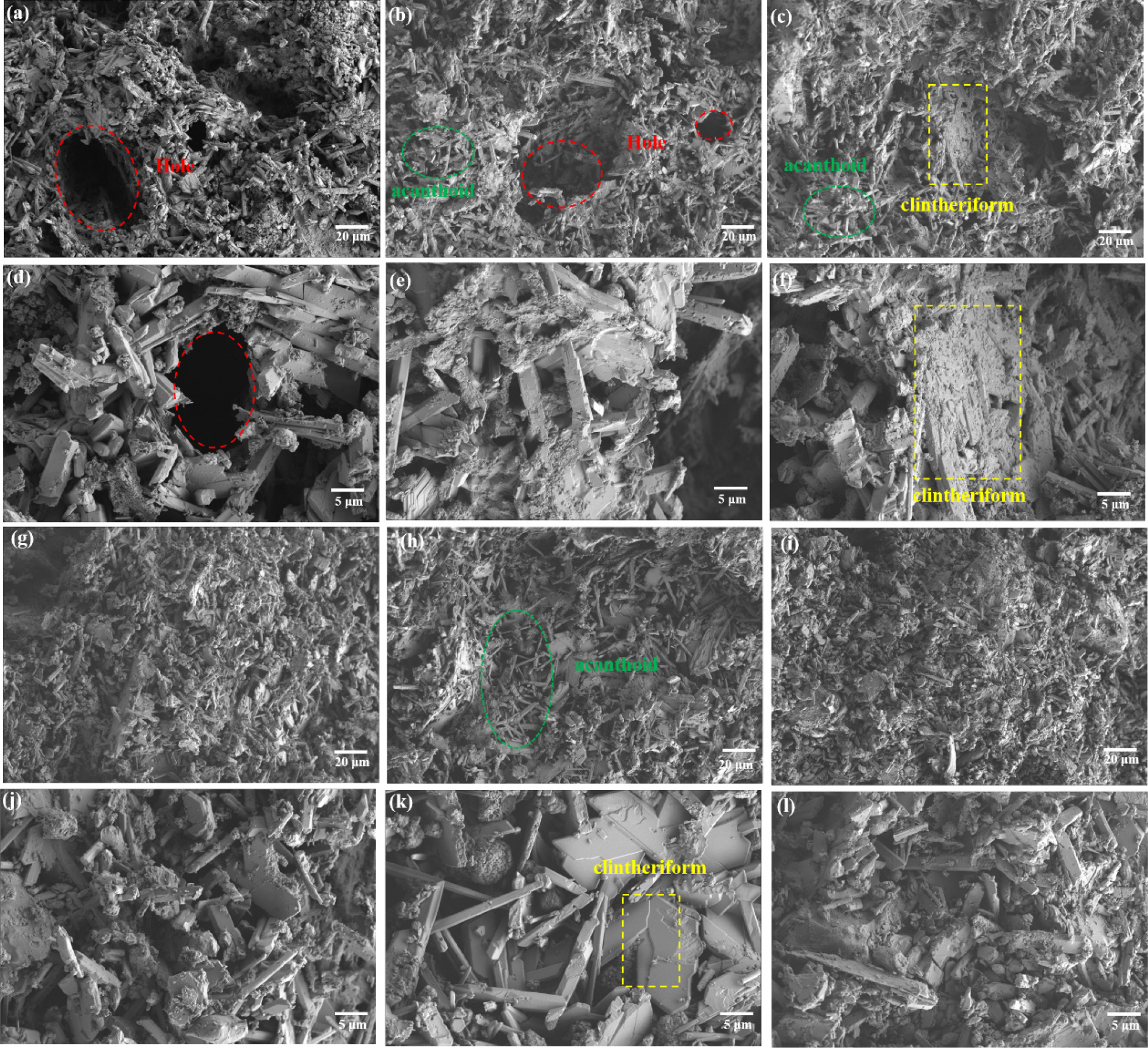
In summary, SEM microstructural analysis revealed the size effect of SiO2 particles of different sizes on the performance of composite gypsum: nanoscale SiO2 (30 nm, 50 nm) can optimize crystal morphology and pore structure through nucleation and filling effects, thereby enhancing performance; whereas micron-scale SiO2 (≥ 500 nm) results in limited performance improvement or even degradation due to weakened nucleation effects and the potential introduction of structural defects. These results are in close agreement with the trends observed in mechanical and water resistance performance tests.
3.9. Mechanism Analysis
When hemihydrate gypsum comes into contact with water, it undergoes rapid hydration. It transforms from calcium sulfate hemihydrate to calcium sulfate dihydrate, but only forms hydration products.38) Gypsum paste does not necessarily form a high-strength gypsum blocks; it hardens only when the hydration product crystals interconnect to form a crystalline network structure, thereby creating a high-strength gypsum blocks.
The properties of hardened gypsum paste primarily depend on: the characteristics of interparticle interactions between newly formed hydration crystals; the number and nature of crystal contact points between newly formed hydration crystal particles; and the distribution pattern of pore numbers and pore sizes within the hardened paste.39)
Based on the nature of interparticle interactions, these can be classified into two types: one is the coagulation type formed by van der Waals forces; the other formed by crystal contact points and chemical bonding between particles. The former exhibits very low structural strength, while the latter possesses very high structural strength. During the initial stage of gypsum paste solidification, the surface is covered by a thin water film, and van der Waals forces act between particles, resulting in very low strength. During gypsum paste formation, if the crystalline network is disrupted, subsequent hydration of hemihydrate gypsum within the paste cannot achieve sufficient supersaturation nor form a new crystalline network. Consequently, if particles fail to re-establish crystal contact bonding, hydrated particles interact solely via molecular forces, leading to reduced product strength.40) The nature and quantity of crystalline contact points constitute crucial structural characteristics of gypsum paste. These properties determine numerous properties of hardened gypsum paste after the crystalline network forms. The contact point properties primarily refer to the degree of lattice deformation and doping conditions, which dictate the strength and solubility of crystalline contact points.41)
At ≤ 15 nm, severe agglomeration occurs (evidenced by SEM and lower strength than 30 nm), introducing stress concentration points. At 30 nm, the particles are small enough to provide a high specific surface area for heterogeneous nucleation (evidenced by TG-DSC mass loss increase) and effective filling of intergranular pores (evidenced by SEM densification), yet they are less prone to agglomeration compared to 15 nm particles. At ≥ 50 nm, the specific surface area decreases, weakening the nucleation effect (TG-DSC shows decreasing mass loss), and the hydrophobic surface becomes more dominant, hindering water diffusion and hydration. For 500 nm and 2 µm, the filling effect still reduces water absorption, but the lack of chemical bonding and poor interfacial adhesion limit strength improvement.
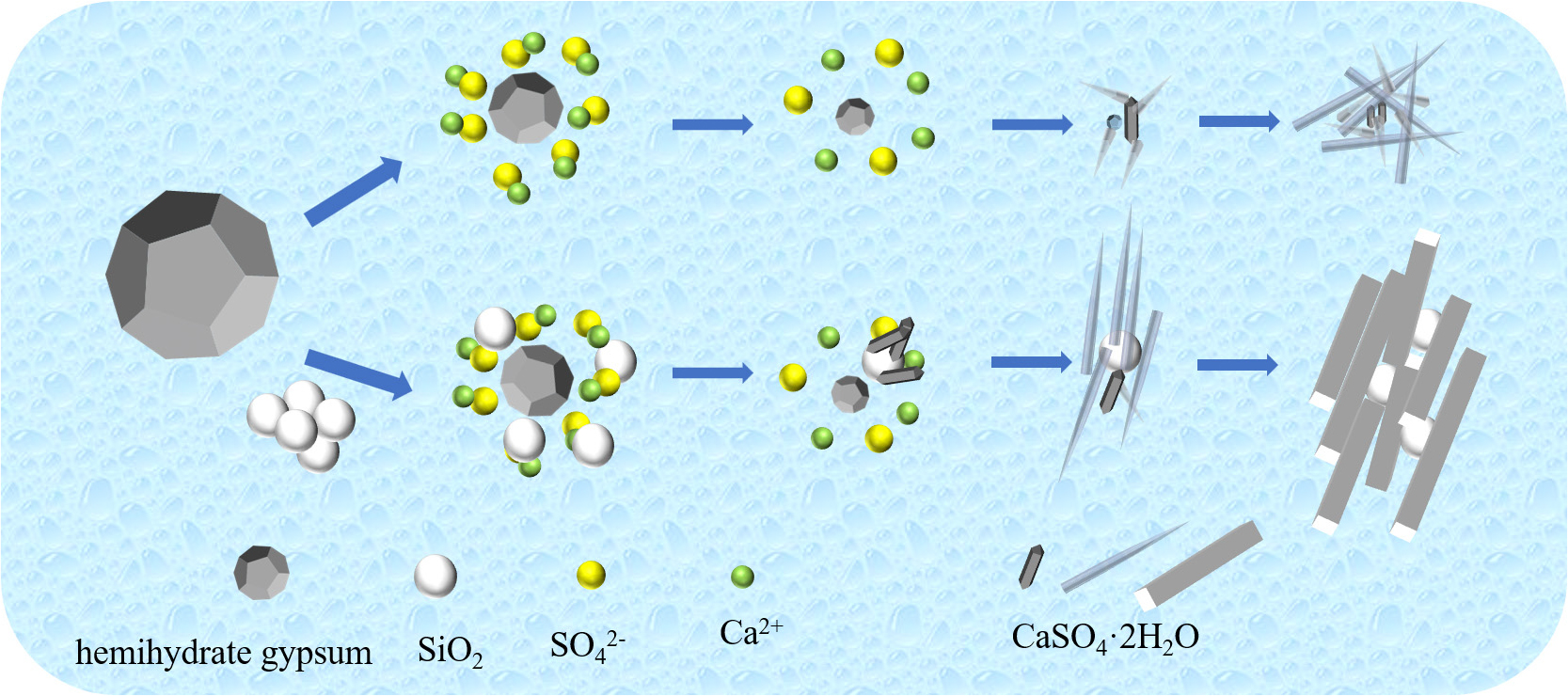
Due to the large pores in phosphogypsum crystals and their rod-like crystal structure, water molecules readily infiltrate the phosphogypsum crystals, thereby affecting the mechanical properties and water resistance of the phosphogypsum. As shown in Fig. 12, incorporating 0.3 % 30 nm silica causes the gypsum paste to become denser during setting and hardening, as the interlocked growth of dihydrate gypsum crystals leaves voids that are effectively filled by the nano-SiO2 particles. The addition of silica particles allows these minute particles to act as nucleation sites, increasing the contact area between the crystalline structure and newly formed grains. Simultaneously, gypsum crystals arrange more tightly into plate-like structures, reducing voids and enhancing structural density. Given silica’s inherent hydrophobic properties and its extremely small particle size at the nanometer and micrometer scales, nano- and micron-sized silica particles can effectively fill the crystalline voids in phosphogypsum. This reduces the porosity of phosphogypsum, making it denser and thereby improving its water resistance. Therefore, this study aims to modify gypsum blocks using silica particles to enhance their water resistance. This modification can further increase the gypsum’s softening coefficient and demonstrate superior water resistance.
4. Conclusion
The incorporation of nano-SiO2 effectively reduces the standard consistency water requirement of β-hemihydrate gypsum and improves the flowability of the slurry; simultaneously, it significantly enhances the dry and water-soaked compressive strengths and softening coefficient of the hardened body, while reducing water absorption, demonstrating excellent water-reducing, strengthening, and water-resistant modification effects. Among these, 30 nm SiO2 particles at a 1.5 % blend ratio exhibit the most outstanding comprehensive modification effects, representing the optimal combination of process parameters. The effect of different particle sizes of nano-SiO2 on gypsum properties exhibits a critical particle size effect: 30 nm particles possess both high surface activity and suitable dispersibility, enabling them to effectively perform dual roles as fillers and nucleating agents; 15 nm particles introduce structural defects due to agglomeration, limiting their strengthening effect; Particles with 500 nm and 2 µm particle sizes exhibit limited reinforcement effects due to insufficient surface activity; however, submicron-sized particles (500 nm) still demonstrate significant advantages in improving water resistance. XRD and FTIR analyses confirm that the incorporation of nano-SiO2 did not alter the phase composition of the gypsum hydration products (which remained as dihydrate gypsum) nor did it form new chemical bonds, indicating that its modification effect is primarily physical filling; TG-DSC analysis indicates that nano-SiO2 of an appropriate particle size can promote the hydration process through a nucleation effect, thereby increasing the yield of dihydrate gypsum; SEM observations further confirm that 30 nm and 50 nm SiO2 effectively refine crystal morphology and increase structural density, serving as the microstructural foundation for achieving macro-level performance improvements. This study validated the technical feasibility of modifying phosphogypsum with nano-SiO2, identified the optimal particle size and dosage parameters, and elucidated the microstructural mechanism of action, thereby providing theoretical support for the large-scale and high-value utilization of phosphogypsum. At the same time, it has opened up new avenues for the development of novel green building materials that combine high strength with excellent water resistance, offering significant engineering application value and environmental benefits.