


1. Introduction
In recent years, magnetic nanofluids have emerged as potential fluids in heat transfer systems, showcasing improved heat-exchanging capabilities. Magnetic nanofluids consist of ferromagnetic nanoparticles held in colloidal suspension in a nonmagnetic base fluid like water. Ferromagnetic materials exhibit resistive behavior upon application and reversal of a magnetic field, which is characterized by a hysteresis loop. Nano-sized ferromagnetic materials, due to their reduced size to the single domain from bulk materials, exhibit distinct magnetic properties. Single-domain particles have larger coercivity and exhibit a square hysteresis loop.1-2) However, the chain formation in nanofluid modifies magnetization reversal and the magnetic hysteresis loop.3) Correlation between particle size/shape and magnetic properties of Fe3O4 nanoparticles was explored.4) Multiple studies have demonstrated that applying a magnetic field induces variations in the rheological and thermophysical properties of magnetic nanofluid, commonly called ferrofluid.5,6,7,8,9) The detected impact of the applied magnetic field on the natural convection of magnetic nanofluid thereby promotes heat transfer characteristics of the fluid. Dibaei and Kargarsharifabad10) in their experimental study inferred that an increase in the frequency of the magnetic field, at a constant Reynolds number, leads to a corresponding increase in the heat transfer coefficient. The frequencies considered for experimentation were 0 Hz, 10 Hz, 20 Hz, and 50 Hz. Ghadiri et al.11) recognized an enhancement in the efficiency of a PVT system while employing ferrofluid under the influence of a time-varying magnetic field of 50 Hz frequency. Flora and Patel12) explored the effect of an alternating magnetic field of 50 Hz frequency and magnetic nanoparticle concentration on the convective heat transfer coefficient. Similarly, Goharkhah et al.13) and Goharkhah et al.14) have discussed about the impacts of constant magnetic field and alternating field at frequency range from 5 Hz-20 Hz over the heat transfer co-efficient of the fluid. Moreover, previous studies have investigated the forced convective heat transfer characteristics of Fe3O4 nanofluids under varying magnetic field conditions.13,14,15) These include the application of constant magnetic fields and alternating fields at 5 Hz and 50 Hz, compared to scenarios with no magnetic influence.16) Zhang and Zhang17) observed enhancement of the heat transfer coefficient by increasing frequency from 0 Hz to 60 Hz. However, at frequencies of 80 Hz and 100 Hz, heat transfer performance gradually decreases. While the majority of research on ferrofluids concentrates on studying the influence of magnetic field intensity, nanoparticle concentration, and Reynolds number on the heat transfer coefficient, there has been limited exploration into the impact on heat rate when magnetic nanofluid is exposed to an alternating magnetic field with varying frequency. Additionally, there is a notable gap in studies that examine the effects of frequencies above 50 Hz. Furthermore, none of the existing literature suggests the tunability of ferrofluids for different parameter changes within temperature control schemes.
Table 1 presents comparative findings from various studies on ferrofluid heat transfer under different magnetic field frequencies. The table shows the variation of the field frequency between 0-100 Hz and the particle concentration between 0.5 wt% and 5 wt% and observes the heat transfer. It is observed that the heat transfer increases with increasing frequency, by increasing particle concentration, and by applying a magnetic field.
Table 1.
Summary of key findings from studies of ferrofluid under the influence of an alternating magnetic field.
| Author |
Test Container Type | Parameters varied | Key Findings |
| Dibaei and Kargarsharifabad10) (2017) | Copper Tube |
Field Frequency: 0-50 Hz Particle Concentration: 1.25 wt%, 2.5 wt%, 5 wt% | The effect of frequency is greater when particle concentration is lower. The overall impact of the alternating field is higher for higher particle concentration. |
| Goharkhah et al.14) (2016) | Parallel Plate Channel |
Field Frequency: 0-10 Hz Particle Concentration: 1 wt%, 1.5 wt%, 2 wt% | There is a dependency of field frequency on heat transfer. An alternating magnetic field is more effective than a constant field. |
| Zhang and Zhang17) (2021) | Copper Tube |
Field Frequency: 0-100 Hz Particle Concentration: 1 wt%, 3 wt%, 5 wt% | When the frequency increases for particle concentrations of 1 wt% and 3 wt%, heat transfer is enhanced. A further increase in concentration has little impact on heat transfer. |
| Razaghi et al.16) (2021) | Spiral Coil of Copper | Field Frequency: 0, 5, and 50 Hz | Heat transfer is enhanced as the field frequency is increased from 0 Hz to 50 Hz. |
| Flora and Patel12) (2023) | Cylindrical vessel of Aluminium |
Field Frequency: 50 Hz Particle Concentration: 0.5 wt%, 1 wt% | Heat transfer increases by increasing particle concentration and applying a magnetic field. |
To overcome the gaps in the existing works, the proposed model explores the parametric influence of varying the frequency of an alternating magnetic field on the heat transfer characteristics of a ferrofluid. The study focuses on a ferrofluid containing magnetite (Fe3O4) nanoparticles with sizes ranging from 50-100 nm in diameter, suspended in distilled water to form a colloidal solution. The investigation aims to provide insights into the correlation between the frequency variation of the applied magnetic field and heat transfer in this ferrofluid-based heat-exchanging system. Major contributions of the work include the following:
1) A concentric setup of vessels is created, where the ferrofluid in the outer vessel functions as a coolant to facilitate heat transfer from the heated water contained in the inner vessel.
2) Ferrofluid is exposed to a magnetic field of varying frequencies (from 0 Hz to 5,000 Hz) as well as the absence of a magnetic field to investigate its influence on heat transfer.
3) An alternative control methodology to control the temperature of process fluid under varying load conditions is presented.
2. Experimental Procedure
The fundamental mechanism in a heat exchange system involves the transfer of heat from one fluid medium to another. These two fluids may interact directly, or they can be separated by a wall of known thermal conductivity. To investigate the impact of varying the frequency of a time-varying magnetic field on the heat transfer rate of a ferrofluid, a dedicated heat exchange system is employed. This ferrofluid is prepared by employing surfactants to coat the magnetic nanoparticles, which creates a repulsive force between the particles, preventing them from sticking together and forming clumps, ensuring uniform nanoparticle dispersion, and preventing agglomeration. In the experimental sequence, distilled water, contained within a stainless-steel vessel, is heated, and subsequently, the heated water-filled vessel is positioned within an aluminium container that is filled with ferrofluid, in a concentric configuration. This setup, illustrated in Fig. 1, facilitates the transfer of heat from the distilled water to the surrounding ferrofluid.
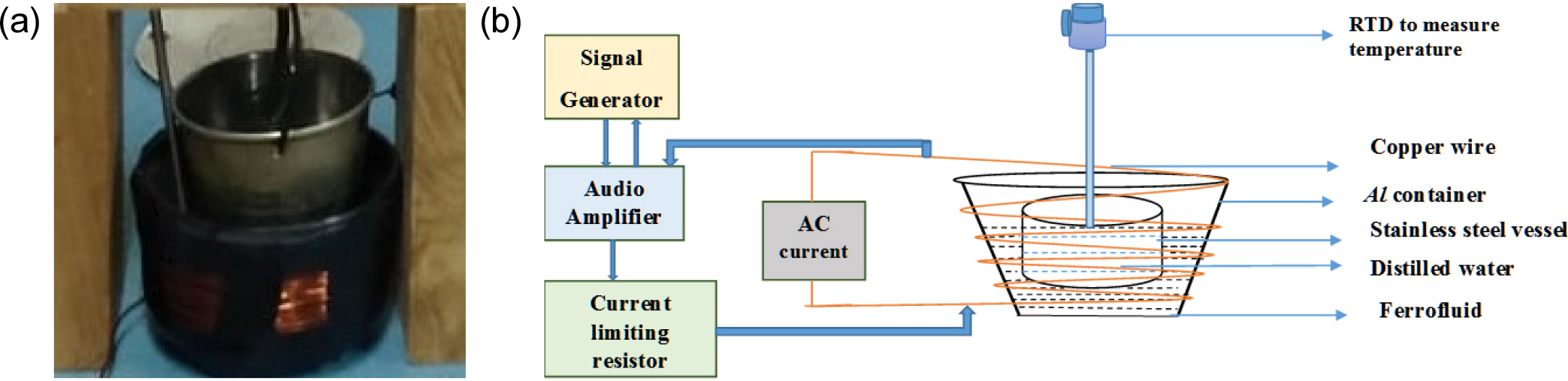
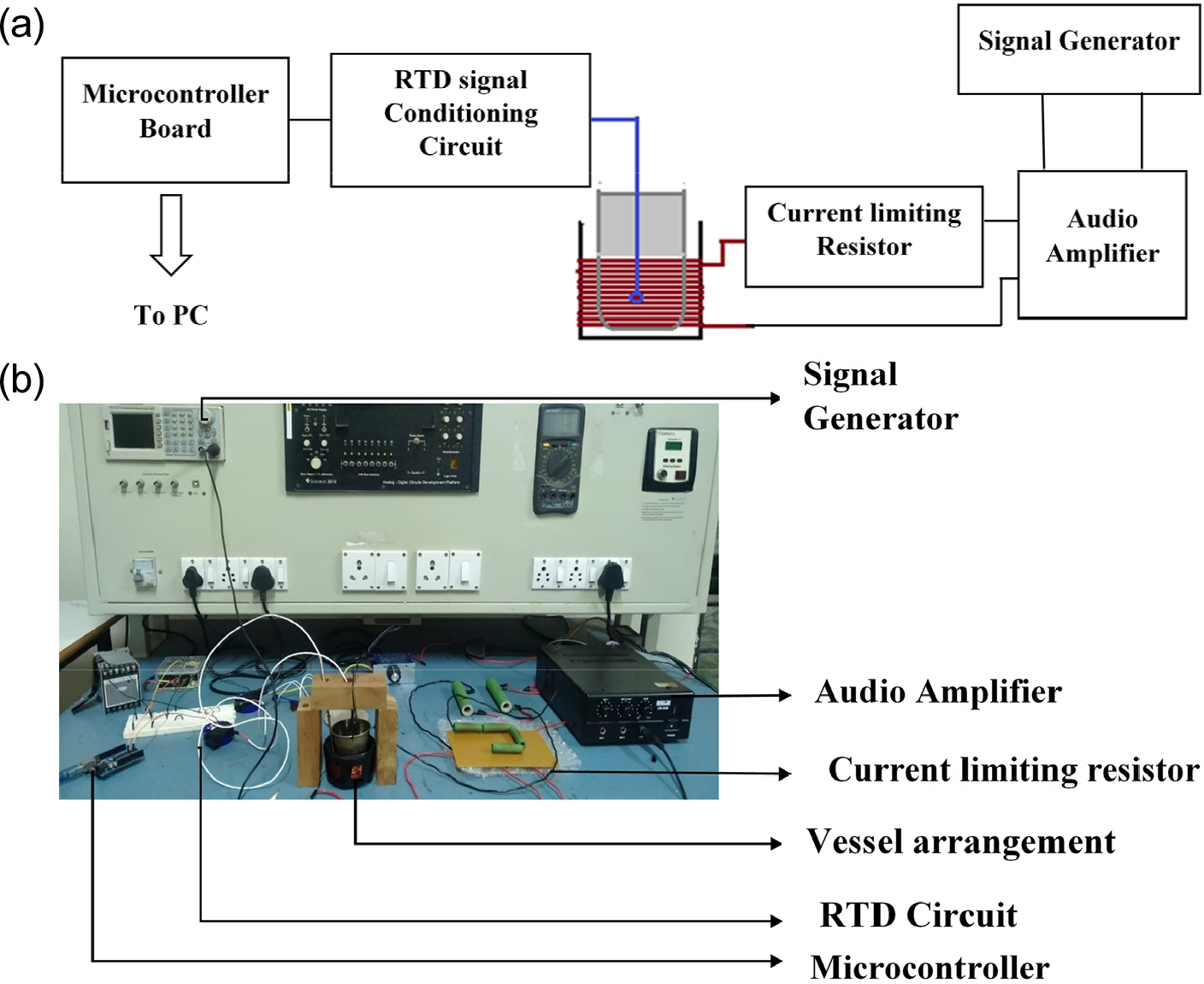
Aluminium container housing ferrofluid is wound by a coil with 28 turns of copper wire, thus effectively forming a solenoid intended to generate a magnetic field. The coil is energized with an alternating current, thereby inducing an alternating magnetic field within the solenoid. This magnetic field is quantified by a pickup coil sensor with an accuracy of ± 2 %.18) As the stainless-steel vessel, containing the heated water, is positioned within the aluminium container filled with ferrofluid exposed to the time-varying magnetic field, a dynamic heat transfer process ensues. The heat is effectively transferred from the heated water to the ferrofluid, inducing changes in the temperature of both media. To precisely measure the water temperature during this thermal exchange, a 3-wire platinum RTD (± 0.15 °C) is placed within the water. The temperature data undergoes signal conditioning before being transmitted to the microcontroller board. After acquisition, the data is imported into a computer for comprehensive evaluation and interpretation of the temperature measurements obtained. The temperature was measured using a 3-wire Pt100 RTD connected to an ATmega 328-based Data acquisition system (DAQ), with a baud rate of 9600 and analog input range of 0-5 V. The output obtained from the temperature transmitter is a 4-20 mA current loop.
Fig. 1 (a) concentric arrangement of vessels (b) schematic diagram of the setup for better understanding. To ensure the reliability of the experimental outcomes, identical environmental parameters are maintained throughout the experiments. In the experimental sequence, initially, a resistive electric heater with a power rating of 25 W is located under the stainless-steel vessel, elevating the temperature of water to a target of 450 °C. Upon reaching this temperature threshold, the electric heater is disconnected from the power supply. Subsequently, the stainless-steel vessel, now containing heated water, is placed into the concentric arrangement within the aluminium pool filled with 1 wt% of Fe3O4 ferrofluid. The coil wound around the aluminium container is energized with an amplified alternating current (sinusoidal), thereby inducing an alternating magnetic field. Heat is transferred from the water to the ferrofluid, resulting in a reduction in the water temperature, which is subsequently measured. The experimentation involves the systematic variation of the frequency of the alternating sinusoidal current coursing through the solenoid. The frequency variation is achieved using a signal generator. The generated signal is then directed to an audio amplifier. The amplified signal, exhibiting different frequencies, is further transmitted through the coil via current-limiting resistors. This variation of frequency establishes a comprehensive analysis of the influence of magnetic field frequency variation on the heat transfer rate of the ferrofluid. The entire experimental setup schematic is shown in Fig. 2(a) and (b).
As the vessel has magnetic properties, the Magnetic field induces induction heating, which affects ferrofluidic behavior by contributing extra heat and possibly altering internal fluid dynamics. This effect masks the true ferrofluidic contribution and influences particle dynamics. To decouple these effects, an experiment is done with water only in a magnetic vessel, and the same experiment is repeated with ferrofluid in a non-magnetic vessel (like glass/PTFE). The former induces pure induction heating, and the latter induces a pure ferrofluidic effect. By comparing and combining both, the magnetic effect from ferrofluids alone can be obtained.
3. Results and Discussion
The amount of heat transferred during a process at constant pressure is expressed as Eq. (1):
where is heat transferred from water to ferrofluid expressed in Joules, is the mass of the fluid, specifically water in kg, which is taken as 0.05 kg (specifically 50 gm), is the specific heat capacity of water at constant pressure, which is a constant 4,184 J/ (kg °C), and is the temperature drop of the fluid expressed in °C and can be obtained from Table 2.
Table 2.
Summary of temperature drop of water at different time intervals.
In all the experiments, the mass and specific heat of the fluid (water) where is constant, and the vessel containing water is exposed to constant atmospheric pressure. Therefore, the quantity of heat transferred from the water to the ferrofluid is directly proportional to the observed change in water temperature, calculated as the difference between the initial and final values (). It is noteworthy that the initial temperature of the heated water remains consistent across all experiments, maintained at a constant value of 45 °C. This standardization facilitates meaningful comparisons across experimental runs. The decrease in temperature over time, as depicted in temperature graphs, depicts the cooling trend of distilled water from its initial value. Fig. 3 illustrates the outcomes of experiments using a 1 wt%. Ferrofluid under the influence of alternating magnetic fields at different frequencies (50 Hz, 1.5 kHz, 500 Hz, 5 kHz).
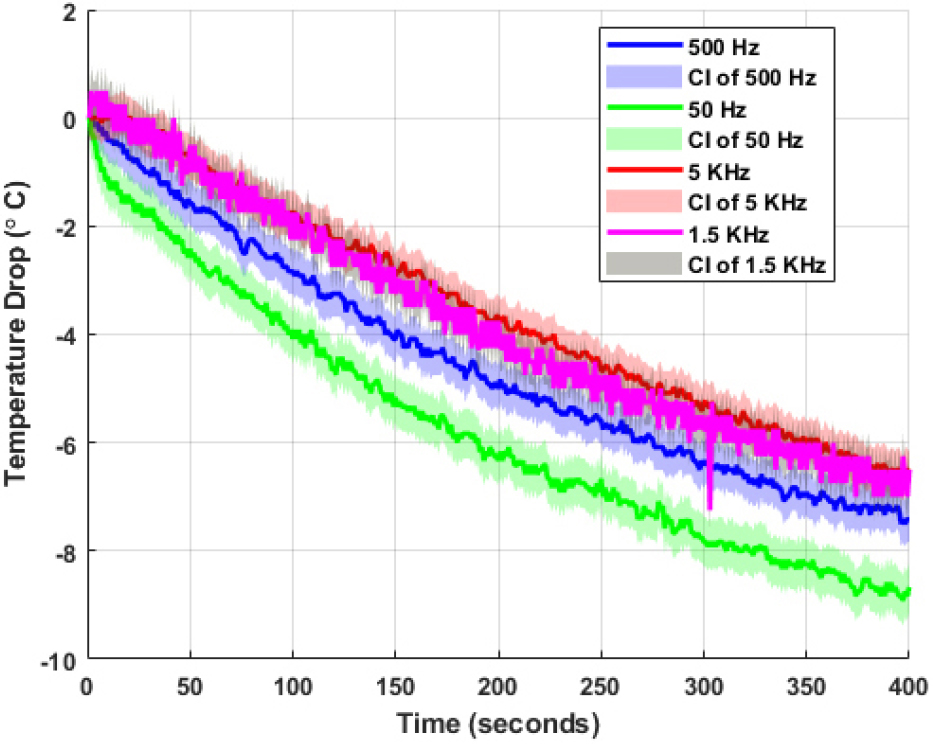
Throughout the experiments, the magnetic field intensity remains constant at a magnitude of 1.6 mT. The plot demonstrates a decline in the temperature of the water from its initial value. Thus, the temperature of water exhibits a more rapid descent when in contact with ferrofluid exposed to a 50 Hz alternating magnetic field. The observed rapid decrease in the temperature of the water can be attributed to the turbulence induced in nanoparticles within the ferrofluid under the influence of an alternating magnetic field, resulting in an enhanced convection rate of the fluid. Meanwhile, if the magnetic field intensity were increased beyond 1.6 mT, the optimal frequency for maximum heat transfer enhancement shifts toward higher frequencies. This is because a stronger magnetic field exerts a greater magnetic torque on the nanoparticles, enabling them to more effectively follow higher-frequency oscillations before the effects of magnetic relaxation and lag become dominant. The above trend implies a declining heat transfer from water to the ferrofluid with the increase of magnetic field frequency. This phenomenon can be attributed to the coercivity of the nanoparticles in the fluid, which opposes the rate of magnetic field reversal and subsequently influences the convection rate of the fluid.
Fig. 4 illustrates the M-H curve for various particle sizes, 5 nm, 10 nm, and 20 nm, measured at different frequencies (50 Hz, 500 Hz, 1,500 Hz, 5,000 Hz). As the frequency is increased, coercivity increases, hysteresis loops widen for all particle sizes, and energy loss per cycle becomes larger. Thus, heat transfer at high frequencies is reduced due to the coercivity effect. Larger particles and higher frequencies increase coercivity, magnetization, and energy losses. 5 nm particles with low magnetization and coercivity behave like superparamagnets, whereas 10 nm particles have moderate magnetization and coercivity. Also, 20 nm particles with high magnetization and coercivity behave more like ferromagnets.
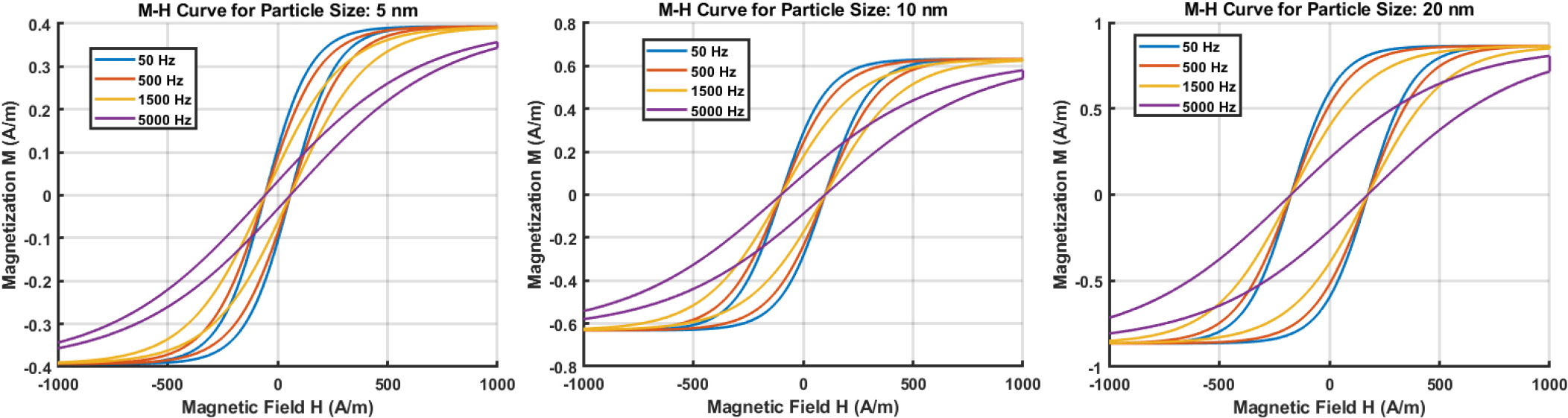
Fig. 5 illustrates that the temperature of water drops most rapidly when exposed to ferrofluid under an alternating magnetic field of 50 Hz frequency, compared to conditions with ferrofluid subjected to no magnetic field or a static magnetic field. A static magnetic field is a constant, unchanging field that does not vary over time. When applied to a ferrofluid, it causes the magnetic nanoparticles within the fluid to align along the direction of the field. This alignment leads to nanoparticle aggregation, forming structures such as chains or clusters, which disrupt the uniform dispersion of particles within the fluid. As a result, the ferrofluid loses its characteristic fluidity and stability. In contrast, an alternating magnetic field continuously realigns the nanoparticles, preventing aggregation and maintaining the colloidal stability essential for preserving the ferrofluid’s unique properties. Therefore, under a static magnetic field, the ferrofluid tends to behave less like a true ferrofluid, as its ability to flow freely and exhibit enhanced heat transfer performance diminishes.
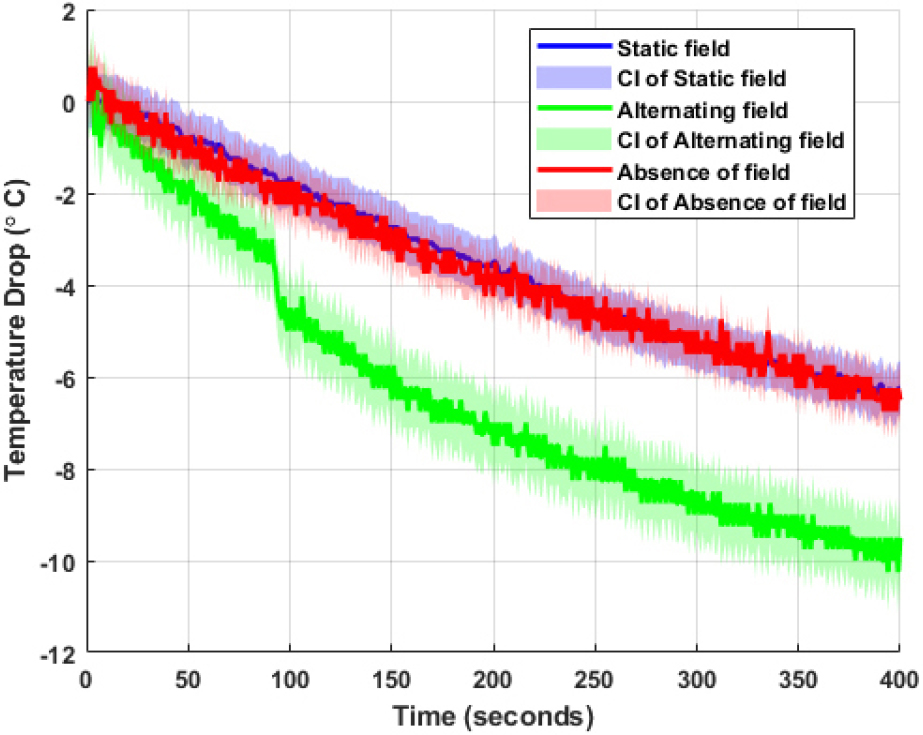
It is also observed that the temperature graph in the case of a static magnetic field is nearly identical to that in the absence of a magnetic field, indicating no significant change in the heat transfer rate. Table 2 summarizes the decline in water temperature under varying magnetic field conditions. Temperature drop measurements are provided at two intervals: one after 2 minutes from the start of the experiment and another after an elapsed time of 5 minutes.
It can be inferred from the data that the decline in the temperature of water is maximum when ferrofluid is under the influence of an alternating magnetic field with a frequency of 50 Hz. This implies that the heat transfer between water and ferrofluid is maximized in this case. Fig. 6 illustrates that heat transfer enhancement with the application of a magnetic field peaks at 50 Hz and subsequently declines at higher frequencies. This trend is attributed to the dynamic behavior of Fe3O4 nanoparticles under an oscillating magnetic field. At lower frequencies of 50 Hz, the nanoparticles effectively follow the magnetic field oscillations, inducing localized agitation and enhancing micro-convection, which improves convective heat transfer. However, as the frequency increases, the ability of nanoparticles to realign with the oscillating field diminishes, leading to a lag between the field and nanoparticle response. This reduces agitation, suppresses micro-convection, and decreases heat transfer.
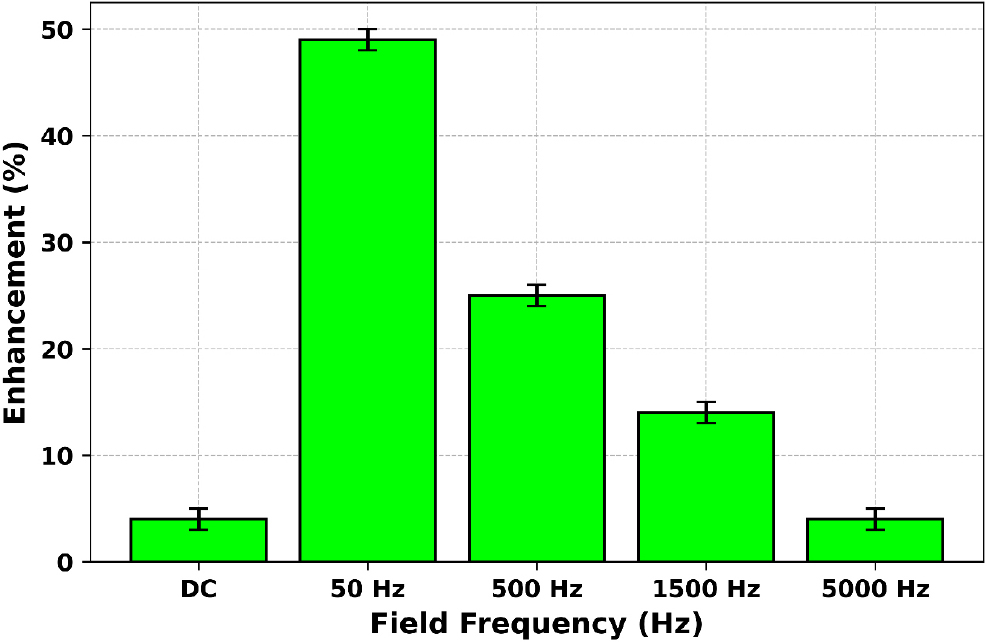
Higher frequencies result in increased magnetic hysteresis losses, which oppose fluid motion and further reduce heat transfer enhancement. The coercivity of Fe3O4 nanoparticles also resists rapid magnetic field reversals, limiting particle mobility and thermal mixing at higher frequencies. Consequently, the decline in heat transfer enhancement above 50 Hz is due to a combination of magnetic lag, hysteresis losses, and coercive resistance.
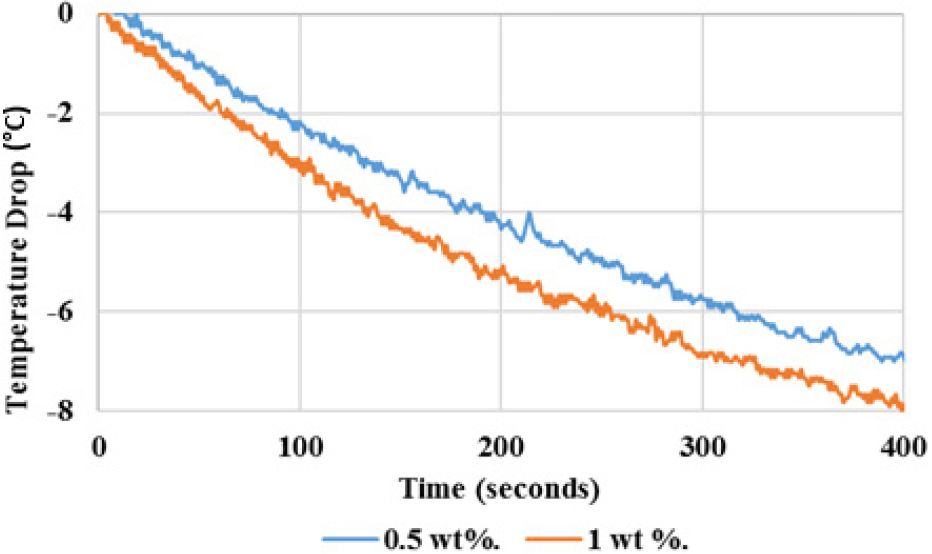
The results of an experiment conducted with 0.5 wt% and 1 wt%. Fe3O4 ferrofluid, subjected to heating in the presence of an alternating magnetic field with a frequency of 50 Hz, is illustrated in Fig. 7. Comparing the results obtained through the experiment, it is observed that the temperature drop of water is less in the latter case, i.e., for Fe3O4 (1 wt%) nanofluid. This implies that the heat transfer rate is higher with Fe3O4 (1 wt%) ferrofluid. It is also evident from the results that the heat rate of the fluid increases with an increase in the concentration of nanoparticles in the ferrofluid. The 1 wt% ferrofluid sample is more effective than the 0.5 wt% sample because it provides a balance between sufficient nanoparticle concentration for enhanced heat transfer and minimal aggregation. At 2 wt%, nanoparticle clustering and increased viscosity reduce fluid mobility, limiting convective heat transfer. This leads to a decrease in heat transfer performance, making 1 wt% the optimal concentration.
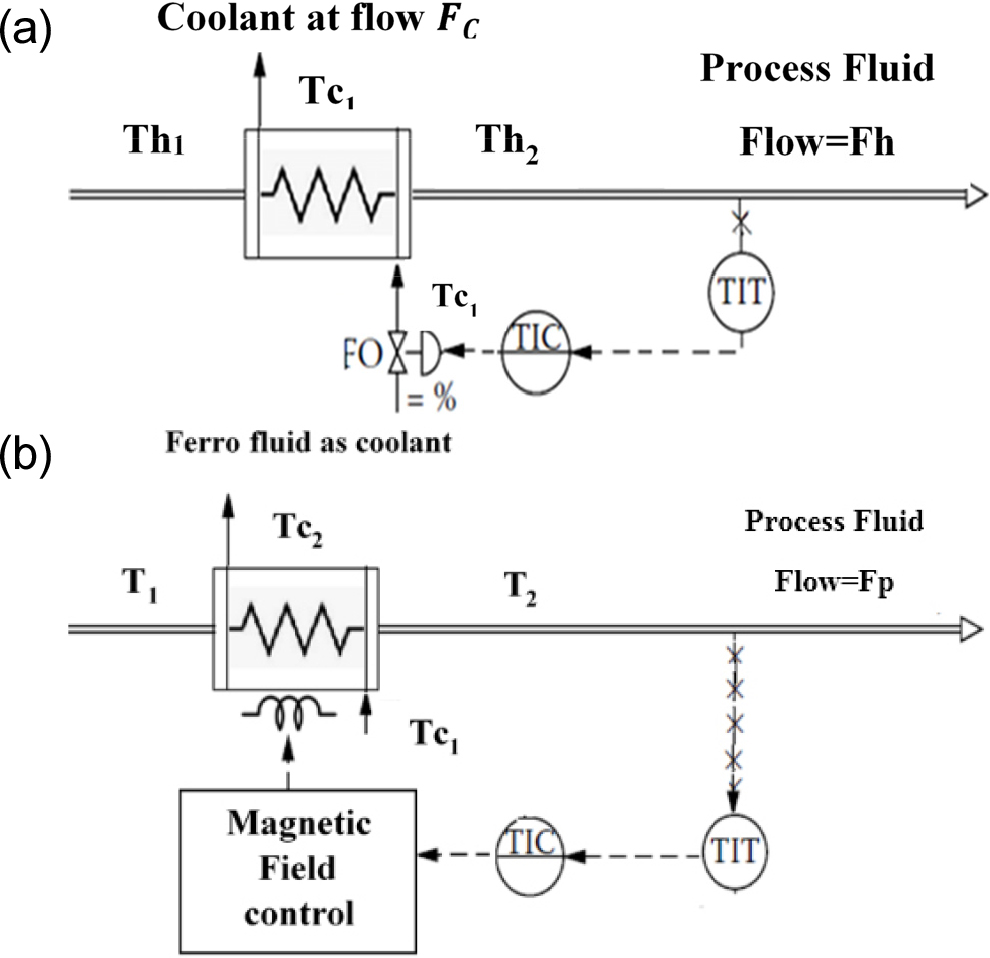
Retention time is the time for which the process fluid stays in the heat exchanger, and it is inversely proportional to its flow rate, Fp. As the retention time of process fluid increases, the exchanger becomes relatively oversized, and heat transfer efficiency increases. Process fluid flow is the process load for the heat exchanger. In case of a rising load, the reduced heat transfer efficiency can be compensated for if the coolant efficiency is increased. From the experimental outcomes, the heat transfer rate is significantly enhanced when ferrofluid is exposed to an alternating frequency of 50 Hz, making the heat exchanger more efficient. When the field frequency is further increased, the heat transfer rate declines, resulting in reduced efficiency. Also, the absence of a magnetic field or the application of a static magnetic field greatly impacts heat transfer. This magnetic field influence can be used to adjust the heat transfer rate for varying load conditions.
In conventional heat exchanger control, an equal percentage valve, which has variable gain, is used to compensate for the decrease in efficiency of the heat exchanger due to a decrease in the retention time of process fluid, as shown in Fig. 8(a).19) Alternatively, the magnetic field can be manipulated to control the heat transfer and compensate for variable load conditions. This arrangement is shown in Fig. 8(b).
4. Conclusion
Enhancing heat transfer rates contributes significantly to the improved heat-exchanging capabilities of a fluid, a crucial aspect in various industrial applications where heat exchangers are employed to regulate the temperature of systems or fluids to desired values. In the presented work, the impact of varying various parameters, specifically the magnetic field frequency and nanoparticle loading, on the heat transfer rate of the Fe3O4-based ferrofluid is investigated and discussed. Alternating magnetic field application is observed to enhance the heat transfer rate of the Fe3O4-based ferrofluid in comparison to the heat transfer rate observed when the ferrofluid is placed in the absence of a magnetic field. The heat transfer rate of the ferrofluid is experimentally examined at various frequencies of the applied magnetic field. Among the tested frequencies, 50 Hz yielded the maximum heat transfer, with performance declining at higher frequencies (e.g., 500 Hz to 5,000 Hz), likely due to limitations in nanoparticle response. Additionally, increasing the Fe3O4 concentration from 0.5 wt% to 1 wt% improved heat transfer, though performance decreased beyond 1 % due to agglomeration and viscosity effects. Static or absent magnetic fields showed negligible enhancement. These findings support using magnetic field modulation, particularly at 50 Hz, as a promising approach for dynamically controlling heat transfer in thermal systems.